Dealer Financing: How the Dealer Arranges Your Car Loan
Financing at the dealership is convenient, and the rate on the contract is not always the rate the lender offered. Here is what happens behind the desk.
Updated By Lenditia Editorial Team 8-minute read How it works
In short
When you finance at the dealership, the dealer passes your application to several lenders, writes the contract with you and usually sells it to a bank, finance company or credit union that then collects your payments. The lender quotes the dealer a buy rate, and the rate you are offered can include extra interest that pays the dealer for arranging the loan. The APR is negotiable. Bring your own quote from a bank or credit union, settle the car's price first, and compare offers by APR and total of payments.
- Who writes the contract
- The dealer
- Who usually holds it
- A bank or finance company
- Is the APR negotiable
- Yes
- Federal cooling-off
- None
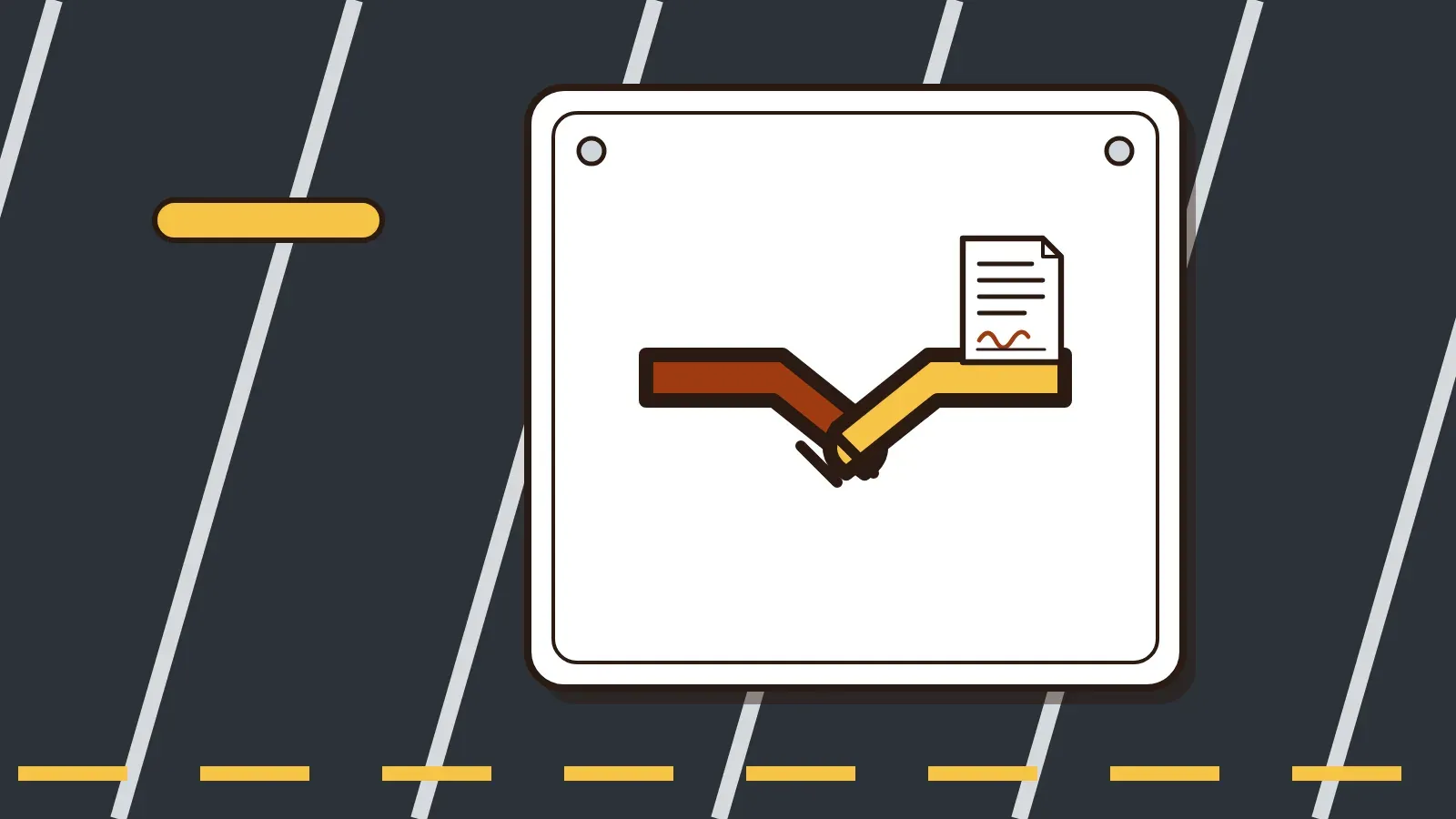
How dealer-arranged financing works
- You fill out one credit application at the dealership, usually with its finance and insurance staff, after you agree to buy a car.
- The dealer sends it to lenders. The CFPB says dealers generally contact about five, which can include banks, credit unions and nonbank finance companies.
- Lenders answer the dealer with the terms on which they would finance you, including a rate called the buy rate.
- The dealer picks one offer to present to you and writes a retail installment contract in which you agree to pay over time.
- The dealer typically sells the contract to that bank, finance company or credit union, which services the account and collects your payments from then on.
The CFPB calls this indirect financing, because the dealer stands between you and the lender. You never talk to the lender before you sign, and you may not know which one will hold your loan until a welcome letter arrives. Whoever holds it, the contract must show the Truth in Lending disclosures: the APR, the finance charge, the amount financed, the total of payments and the total sale price.
The buy rate and the dealer markup
The buy rate is the rate a lender quotes the dealer for your contract. The rate the dealer offers you can be the buy rate plus additional interest that pays the dealer for handling the financing. That addition is the dealer markup. You will not see the buy rate on your paperwork, only the APR you agreed to. The FTC notes that dealers typically profit from offering financing and may not always offer terms as good as you could find elsewhere.
| Rate on the contract | Monthly payment | Total interest |
|---|---|---|
| 6.00% (lender's buy rate) | $579.98 | $4,798.80 |
| 7.50% (with markup) | $601.14 | $6,068.40 |
In this example the markup costs about $21 a month and close to $1,270 over the loan. You can negotiate the APR just as you negotiate the price of the car. Two questions help: whether the dealer received other offers, and whether any of them carried a lower rate or better terms. A written quote from another lender is the strongest argument you can bring, because the CFPB notes that a bank or credit union loan tends to be cheaper when it avoids the markup.
What dealer financing is good for
Carmaker promotions
Low promotional rates on new models come from the carmaker's finance company and are arranged through its dealers. See new car loans.
One application, several lenders
The dealer can shop your application to lenders you might not reach on your own.
Convenience
You sign for the car and the financing in one visit, and the dealer handles the paperwork for the sale.
A benchmark to beat
If you arrive with your own quote, the dealer has a figure it must match or beat to win the financing.
Where dealer financing can cost you
- Talking only about the payment. A target payment can be met with a longer term or a higher price, which hides the true cost.
- Add-ons. GAP, etching and service contracts are separate purchases financed with the car. You can say no and ask each price; dealers may not slip them into the deal or misrepresent them. See add-ons, GAP and service contracts.
- Conditional deals. You may drive home before a lender has bought the contract and later be asked to sign again on worse terms. Our page on yo-yo financing covers what to do.
- Negative equity. What you still owe on a trade-in can be folded into the new contract, so you start owing more than the car is worth.
How to compare the dealer's offer with your own
- Get a direct quote first from a bank or credit union; see getting preapproved.
- Agree on the price of the car before discussing financing or your trade-in.
- Ask the dealer to beat your APR for the same term and the same down payment.
- Read the disclosure box in the contract: APR, finance charge, amount financed and total of payments. Our guide to the retail installment contract explains each line.
- Check the amount financed against the price plus tax and fees; anything more is an add-on or negative equity.
Compare by APR rather than by the interest rate alone, because the APR also reflects fees. If you believe a dealer misrepresented the deal, our page on dealer complaints lists where to report it.
Who sets the rules for dealer contracts
Most of the rules come from the state where you buy. States license many of the companies that buy dealer contracts, and some cap the rate a dealer contract may carry. In Texas, for example, the 2026 rate chart from the Office of Consumer Credit Commissioner allows up to 18% on 2024 and newer models and roughly 24.68% to 26.75% APR on 2021 and older ones, depending on the term. A cap is a ceiling, not a fair price: a contract can be legal and still cost far more than a credit union loan. Each state law page lists the local limit and the regulator.
At the federal level, the Consumer Financial Protection Bureau has supervised nonbank auto finance companies with at least 10,000 originations a year since 2015. In August 2025 it asked for comments on raising that threshold, which would leave fewer companies under regular federal exams. Your rights under federal lending law, including the disclosures in your contract and the ban on credit discrimination, stay the same either way.
Questions people ask
Can I negotiate the interest rate the dealer offers?
Yes. The rate can include a markup over the lender's buy rate, and you can negotiate the APR like the price. A written offer from another lender gives you leverage.
Who do I pay after financing through the dealer?
Usually the bank, credit union or finance company that bought the contract. It will send you payment instructions; until they arrive, ask the dealer where to send any payment that falls due.
Does applying at a dealership hurt my credit?
Each lender that checks your credit can create an inquiry. The CFPB says auto loan inquiries made within a window of 14 to 45 days, depending on the scoring model, count as one.
Is dealer financing more expensive than a bank loan?
Often, because of the markup, but not always. Carmaker promotions can be cheaper, and dealers can match outside offers. Compare by APR and total cost.
Sources
- Consumer Financial Protection Bureau: What is dealer-arranged financing?
- Consumer Financial Protection Bureau: What is a car loan?
- Federal Trade Commission: Financing or leasing a car
- Federal Trade Commission: Buying a used car from a dealer
- Texas Office of Consumer Credit Commissioner: motor vehicle sales finance rate charts, 2026
- Federal Register: Defining Larger Participants of the Automobile Financing Market (90 FR 38415)
Facts on this page were checked against these sources on October 26, 2026.
Hear from auto lenders about this car
Describe the car and the loan in five answers. Lenditia sends your request to auto lenders, car dealers and loan brokers, who may contact you with financing options. Nothing is agreed until you sign a contract with one of them.
- 1 The car, the amount, your credit and ZIP code.
- 2 Your name, phone, email and consent to be contacted.
- 3 An auto lender, car dealer or loan broker may call, text or email you. Compare any offer by APR and total cost before you sign.
Sending a request costs you nothing. Lenditia is not a lender and is paid by the auto lenders, car dealers and loan brokers who receive requests; they set their own rates and terms. How we make money.
Read next
-
Guide
Understand APR
APR vs interest rate, the finance charge on your contract, and how a dealer markup raises the APR.
-
Guide
Retail installment contract
The disclosure box, the Holder Rule notice, spot delivery and arbitration clauses, and a signing checklist.
-
Help
Yo-yo financing
The dealer says your financing fell through after you drove away. What to check and what to refuse.