Kansas Car Loan Laws
Kansas lets the dealer and buyer agree on the rate, leaves doc fees uncapped, and gives you one 20-day chance to catch up before repossession.
Updated By Lenditia Editorial Team 6-minute read Right to cure
In short
Kansas protects car buyers more at the back end of a loan than at the front. There is no general rate cap on a dealer contract: the Kansas Uniform Consumer Credit Code lets the parties agree on the finance charge, and limits only the upfront prepaid charge. If you fall behind, the creditor must send a notice once you are 10 days late and give you 20 days to catch up, but only the first time on that loan. Cars bought on credit for $1,000 or less carry no deficiency after repossession. The Office of the State Bank Commissioner (OSBC) enforces the Code.
- Right to cure
- 20 days, once per loan
- Rate ceiling
- No general cap
- Doc fee limit
- No cap in state law
- Vehicle sales tax
- 6.5% plus local tax
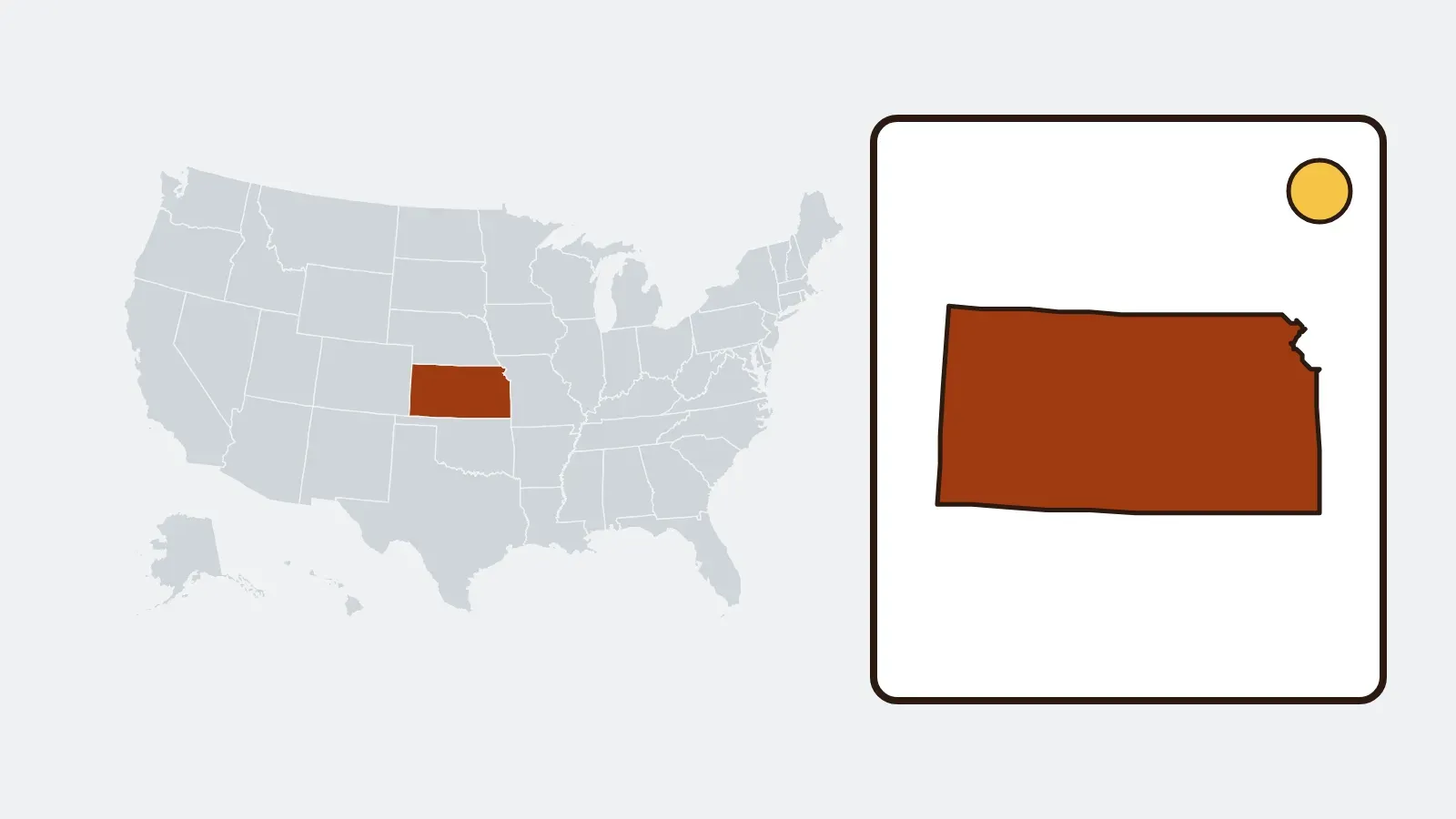
Kansas car-finance rules at a glance
- Right to cure
- Yes: 20 days after a notice, once 10 days in default; one cure notice per loan
- K.S.A. 16a-5-111, for defaults that are missed installment payments.
- Rate ceiling
- No general cap on dealer contracts; prepaid charge up to 2% or $300
- K.S.A. 16a-2-201 allows any rate agreed; banks and credit unions follow their own rules.
- Doc fee limit
- No cap in state law; the fee is taxable
- After repossession
- Notice before sale; redemption until sale; no deficiency if cash price was $1,000 or less
- Vehicle sales tax
- 6.5% state plus local tax, on the price minus trade-in
- Regulator
- Office of the State Bank Commissioner (OSBC)
What a Kansas car contract may charge
The rules for a dealer-arranged retail installment contract sit in K.S.A. 16a-2-201. It says a seller may charge a finance charge at any rate the two sides agree to. In practice, your rate is set by your credit, the lender that buys the contract and how hard you shop.
- No rate ceiling. The statute does not cap the APR on a consumer credit sale, so the only protection is comparing offers.
- Prepaid finance charge. Any charge paid upfront as part of the finance charge may not exceed 2% of the amount financed or $300, whichever is less.
- Written APR. Federal Truth in Lending rules still require the contract to show the APR and the total finance charge.
Fees and taxes at the dealership
- Documentary or administrative fee. Kansas law sets no dollar limit on it. The Department of Revenue treats it as part of the taxable selling price.
- Sales tax. The state rate is 6.5%, and city and county taxes are added. A dealer charges the combined rate of its own location; if your home rate is higher, you may owe the difference as local compensating use tax when you register the car.
- Trade-in. The dealer taxes the price left after the trade-in allowance, as long as the trade and the purchase are one transaction and the titleholder is the same.
- Finance charges and GAP. Interest and GAP insurance shown separately on the invoice are not taxed.
What happens if you fall behind in Kansas
Kansas rewrote parts of its Uniform Consumer Credit Code effective January 1, 2025, and the cure rules now sit in K.S.A. 16a-5-111. They apply when the default is a missed installment payment. The Code covers consumer contracts up to a threshold amount that was $69,500 on July 1, 2024 and rises with inflation each January, so most car contracts fall under it.
- Notice after 10 days. Once you have been in default for 10 days, the creditor may send a written notice that states the amount due, the deadline and your right to cure.
- Twenty days to cure. For 20 days after that notice, it may not repossess the car or demand the full balance. Paying the past-due amount and late fees restores the contract.
- One notice per loan. After the creditor has sent one cure notice on an obligation, a later default on the same loan carries no new cure period.
- Repossession limits. Without a court order, the creditor may take the car only if it can do so without entering your home, without force and without a breach of the peace.
- Sale and deficiency. You owe a deficiency only if the car was sold in good faith and in a commercially reasonable way. If the cash price was $1,000 or less, you owe no deficiency at all (K.S.A. 16a-5-103).
Before a sale, the creditor must also send the notice that Article 9 of the Uniform Commercial Code requires, and you may redeem the car until it is sold. Our guides on repossession and the balance left after a sale walk through each step.
Where to check a lender and complain
The Office of the State Bank Commissioner regulates consumer finance companies in Kansas and offers a company lookup and a complaint form on its website. Federally chartered banks and credit unions answer to their own regulators.
Office of the State Bank Commissioner
Its Consumer and Mortgage Lending area covers consumer finance companies, and its site has a company lookup and a complaint form.
Kansas Attorney General
Takes complaints about deceptive or unconscionable dealer practices from consumers.
Consumer Financial Protection Bureau
Takes complaints about any auto lender or servicer, including banks and finance companies.
Questions people ask
Is there a maximum interest rate on a car loan in Kansas?
Not for a dealer contract. K.S.A. 16a-2-201 lets the parties agree on the finance charge; only the prepaid portion is limited, to 2% of the amount financed or $300, whichever is less.
Do I get a warning before my car is repossessed in Kansas?
The first time, yes. After you have been in default for 10 days, the creditor must send a cure notice and wait 20 days. Later defaults on the same loan carry no new notice.
Can a Kansas dealer charge any doc fee it wants?
State law sets no cap. The fee is taxable, so ask for it in writing and include it when you compare out-the-door prices.
Does a trade-in lower the sales tax in Kansas?
Yes. The dealer taxes the price after the trade-in allowance when the trade and the purchase are one transaction with the same titleholder.
Sources
- K.S.A. 16a-5-111: Notice of right to cure; cure; repossession (effective January 1, 2025)
- K.S.A. 16a-2-201: Finance charge for consumer credit sales
- K.S.A. 16a-5-103: Restrictions on deficiency judgments
- K.S.A. 16a-1-301: Definitions, including the threshold amount
- Kansas Department of Revenue: Publication KS-1526, Business taxes for motor vehicle transactions (rev. July 2025)
- Office of the State Bank Commissioner of Kansas
Facts on this page were checked against these sources on October 26, 2026. The Kansas Uniform Consumer Credit Code amendments of 2024 took effect on January 1, 2025.
Read next
-
Help
Behind on payments
What a missed payment costs, what to ask your lender for, and when repossession becomes a risk.
-
Help
Deficiency balance
How lenders compute what you owe after a repossession sale, and how to check or dispute it.
-
Guide
Get preapproved
Prequalification vs preapproval, how rate shopping affects your credit, and how to use an offer.