New York Car Loan Laws
New York leaves the rate to the contract, caps the dealer's paperwork fee at $175, and lets you get a repossessed car back by catching up if you only missed payments.
Updated By Lenditia Editorial Team 6-minute read Right to cure
In short
New York's Motor Vehicle Retail Instalment Sales Act lets the dealer and buyer agree on the finance charge rather than setting a ceiling. A dealer's optional fee for filing your title and registration may not exceed $175, and the invoice must say it is not a state fee. Sales tax is 4% for the state plus the local rate where you live, and a trade-in comes off the taxable amount. There is no warning period before repossession, but the lender must tell you how to redeem the car within 72 hours after it takes it, and if your only default was missed payments, the contract may not demand the whole balance when you offer the past-due amount and costs. The Department of Financial Services licenses sales finance companies.
- Right to cure
- Yes: catch up after repo
- Rate ceiling
- Rate set by contract
- Doc fee limit
- $175
- Vehicle sales tax
- 4% state plus local
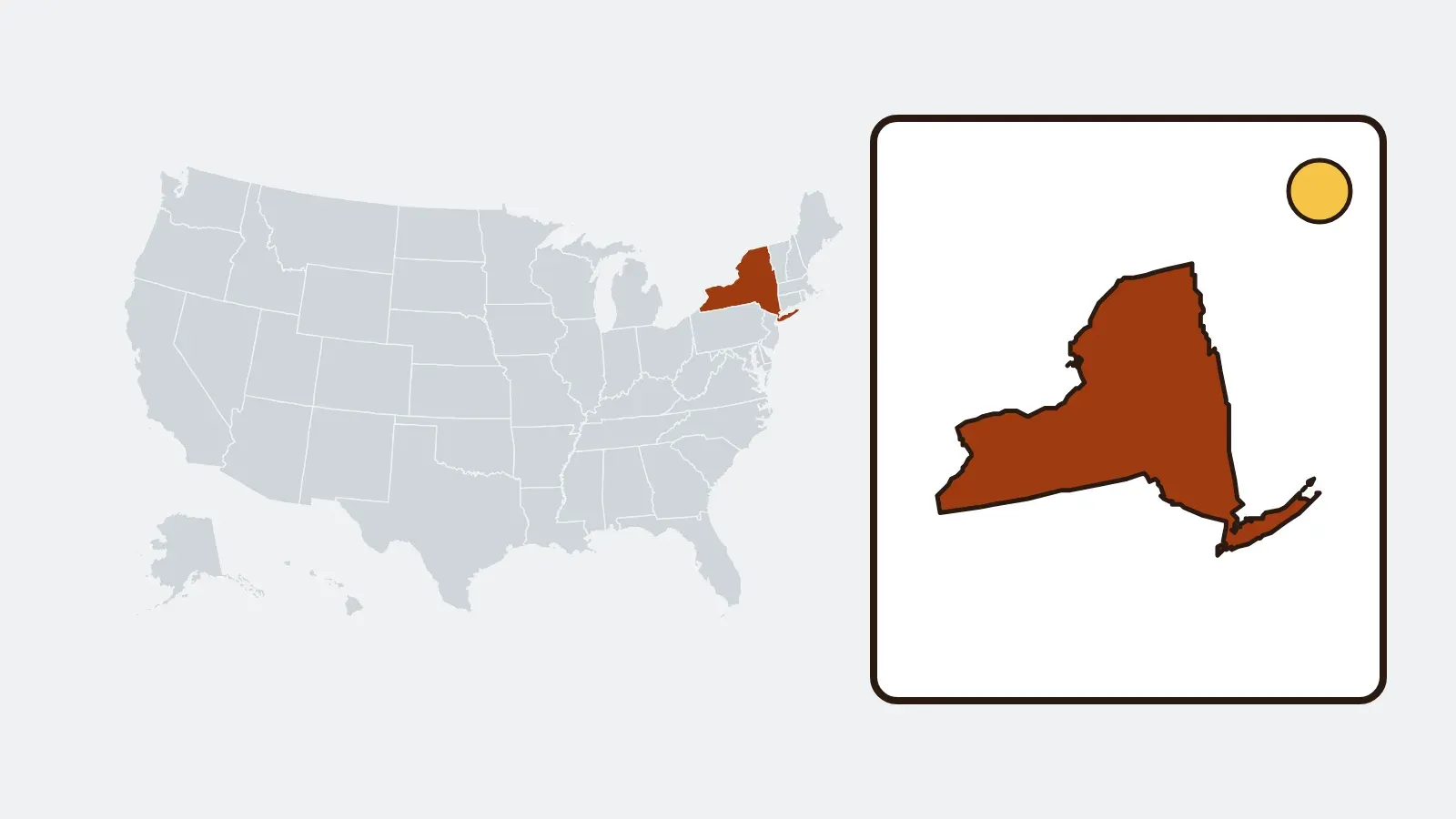
New York car-finance rules at a glance
- Right to cure
- Yes, after repossession for missed payments: pay the past-due amount and costs
- PPL §302(13)(g) voids acceleration on a timely tender; no warning before repossession; redemption notice within 72 hours (§316).
- Rate ceiling
- No general cap on dealer contracts; rate as agreed
- Personal Property Law §303; banks and credit unions follow their own rules.
- Doc fee limit
- $175 for title and registration filing; optional, disclosed
- 15 NYCRR §78.19; the invoice must say it is not a state or DMV fee.
- After repossession
- Redemption notice in 72 hours; sale notice; deficiency allowed
- Vehicle sales tax
- 4% state plus local rate; trade-in reduces the taxed amount
- Regulator
- New York Department of Financial Services
What a New York car contract may charge
Article 9 of the Personal Property Law, the Motor Vehicle Retail Instalment Sales Act, governs the retail instalment contract you sign when a dealer arranges financing. Section 303 lets the seller charge the rate or rates agreed with the buyer. It names no percentage, so the APR on your contract is the figure to compare and negotiate.
- Variable rates. A contract may use a variable rate tied to a published index, but the rate may not change more often than once every three months.
- Late charges. A delinquency charge may apply only to a payment at least 10 days late, at the rate the contract states.
- Collection fees. If the contract allows it and an outside attorney collects, attorney fees may not exceed 15% of the amount due, plus court costs.
- Acceleration. The holder may not call the whole balance due arbitrarily when you are not in default.
With no fixed ceiling, an outside offer is your best check on the dealer's rate. Our guide to reading the APR explains what to compare.
Dealer fees and sales tax in New York
| Charge | Limit | Condition |
|---|---|---|
| Title and registration processing | $175 | Optional; dealer must actually file the application |
| Special or distinctive plates | $5 | Dealer must actually file the plate application |
If the dealer charges either fee, every copy of the invoice must call it an optional dealer fee and state that it is not a New York State or DMV fee. Unless a lien is being recorded or the dealer issued plates, you may file the application yourself at a DMV office.
- Sales tax. The state rate is 4%, and you also pay the local sales or use tax for where you live. The dealer collects it, or you pay at the DMV when you register a private purchase.
- Trade-in. The taxable receipt excludes credit for property taken in part payment and meant for resale, so your trade-in reduces the taxed amount.
- Add-ons. A service contract or GAP waiver is optional, and financing it adds interest.
What happens if you fall behind in New York
No New York statute gives car buyers a notice and a fixed period to catch up before repossession. Once you default under the contract, the holder may repossess without going to court, but the contract may not permit an unlawful entry onto your property or a breach of the peace (Personal Property Law §302).
- Notice of redemption rights. Within 72 hours after a repossession or a voluntary surrender, the holder must deliver or mail a notice of your right to redeem, the amount needed, and how to reach it (§316).
- Catching up after a repossession. If your only default was missed payments, a contract term that accelerates the debt is void when you make a timely tender of the amount that would redeem the car without acceleration, that is, the past-due payments and allowed costs (§302(13)(g)). This is why we count New York as a right-to-cure state.
- Notice of sale. Under the Uniform Commercial Code the holder must send notice before selling the car, and you can redeem until it is sold.
- The deficiency. You owe any shortfall after a proper sale, reduced by part of the unearned finance charge you would have saved by paying off early (§315).
Our guides to repossession and the deficiency balance explain how to check the notice and the figures.
Where to check a lender and complain
A company that buys car contracts from dealers needs a sales finance company license from the Department of Financial Services under Banking Law Article 11-B. Banks and credit unions are exempt and answer to their own regulators. Payday and title-loan rules are on Lendmira's New York page.
Department of Financial Services
Licenses sales finance companies through NMLS and takes complaints about them.
Department of Motor Vehicles
Registers dealers and enforces the dealer fee and invoice rules in 15 NYCRR Part 78.
Consumer Financial Protection Bureau
Takes complaints about any auto lender or servicer, including banks and finance companies.
Questions people ask
What is the maximum interest rate on a car loan in New York?
The Motor Vehicle Retail Instalment Sales Act does not set a figure for dealer-arranged contracts; the rate is the one you and the seller agree to. Compare the APR with an outside offer.
How much can a New York dealer charge for a doc fee?
Up to $175 for filing your title and registration, and only if the dealer actually files them. The fee is optional, and the invoice must say it is not a state fee.
Do I get a warning before my car is repossessed in New York?
Not by law. After the repossession, the holder must send a notice of your redemption rights within 72 hours. If you only missed payments, a timely offer of the past-due amount and costs blocks acceleration. See what to do when you fall behind.
Does a trade-in lower the sales tax in New York?
Yes. The tax is figured on the price minus the credit for your trade-in, at 4% for the state plus your local rate.
Sources
- New York Personal Property Law §303: Credit service charge limitation
- New York Personal Property Law §302: Requirements as to retail instalment contracts
- New York Personal Property Law §315 and §316: Deficiency and notice of redemption rights
- 15 NYCRR §78.19: Dealer fees for registration and title applications (Justia Regulations)
- New York Tax Law §1105 and §1101: Sales tax rate and definition of receipt
- New York DMV: Sales tax information
- Department of Financial Services: Sales finance company license
Facts on this page were checked against these sources on October 26, 2026. The $175 fee limit is from the regulation text current through June 2025.
Read next
-
Guide
Retail installment contract
The disclosure box, the Holder Rule notice, spot delivery and arbitration clauses, and a signing checklist.
-
Help
Repossession
When the lender can take the car, what an agent may not do, and how to get it back.
-
Help
Deficiency balance
How lenders compute what you owe after a repossession sale, and how to check or dispute it.