Arkansas Car Loan Laws
Arkansas writes its interest cap into the constitution, limits the dealer's service and handling fee to $129, and lets lenders repossess without a cure period.
Updated By Lenditia Editorial Team 6-minute read No right to cure
In short
Amendment 89 to the Arkansas Constitution caps interest at 17% a year on loans and contracts that do not involve a federally insured bank or a government unit. Banks based in Arkansas may charge what federal law allows instead. Dealers may charge a service and handling fee of no more than $129, and they must post it and label it as not required by law. You pay the 6.5% state sales tax when you register the car, on the price minus your trade-in. Arkansas has no right to cure before repossession.
- Right to cure
- None in state law
- Rate ceiling
- 17% a year (non-bank)
- Doc fee limit
- $129
- Vehicle sales tax
- 6.5% state + local
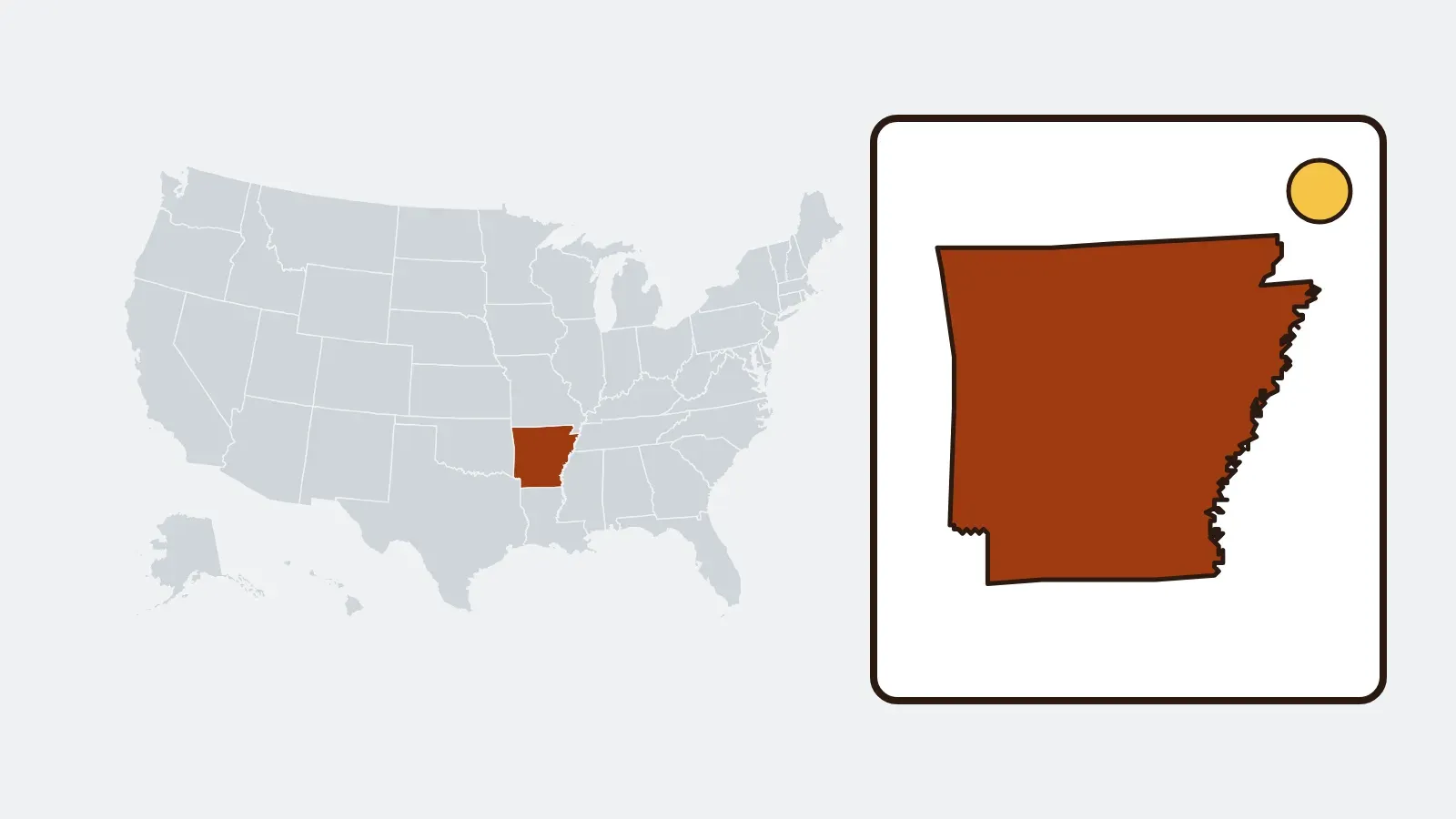
Arkansas car-finance rules at a glance
- Right to cure
- None; repossession may follow any default
- Rate ceiling
- 17% a year, except federally insured banks based in Arkansas
- Amendment 89 to the state constitution. Arkansas banks may use the federal rate; credit unions may follow other rules.
- Doc fee limit
- $129 service and handling fee; must be posted and labeled as not required by law
- Ark. Code §23-112-317 (2025 code); the Motor Vehicle Commission sets the fee by rule within $0–$129.
- After repossession
- Notice before sale; you may redeem; deficiency allowed
- Vehicle sales tax
- 6.5% state plus local, minus trade-in; under $4,000 exempt
- Used vehicles from $4,000 to under $10,000 pay a reduced rate (Ark. Code §26-52-324).
- Regulator
- Attorney General, Consumer Protection Division
- We found no separate state license for auto finance companies; the Motor Vehicle Commission licenses dealers.
How much interest an Arkansas car loan can carry
Arkansas is one of the few states with its usury limit in the constitution. Amendment 89, adopted in 2010, splits lenders into groups. A federally insured bank, national bank or savings association with its main office in Arkansas may charge the rate allowed under federal law (12 U.S.C. §1831u, as it stood on March 1, 2009). Loans to and from government units have their own rule. Everything else, including finance companies and other non-bank lenders, falls under a flat ceiling of 17% a year.
| Who holds the debt | Maximum rate |
|---|---|
| Finance company or other non-bank lender | 17% a year |
| Federally insured bank based in Arkansas | Rate allowed by federal law |
A 17% ceiling is a limit, not a price. Buyers with good credit usually pay far less, and the APR on your retail installment contract is the figure to compare. Ark. Code §4-57-104 ties the state's usury statute to the amendment. Credit unions and banks based in other states may lend under different rules, so ask any lender which limit applies to your loan. Check the dollar cost with the car payment calculator. Payday and title loans, which the cap keeps out of the state, are covered on our sister site's Arkansas lending laws page.
The $129 handling fee and vehicle taxes
- Service and handling fee. Ark. Code §23-112-317 lets a dealer charge a fee of $0 to $129, set by the Arkansas Motor Vehicle Commission. If the dealer charges it, it must charge every retail customer the same and show it as a separate line on the buyer's order.
- Required notice. The worksheet, buyer's order and installment contract must carry a conspicuous notice that the fee is not an official fee, is not required by law and may bring the dealer a profit. Dealers must also post a sign with the amount where sales papers are signed.
- Sales tax. The general state rate is 6.5%, and local taxes may be added. You pay the tax to the Department of Finance and Administration when you register the car, whether you bought from a dealer or a private seller (Ark. Code §26-52-510).
- Trade-in and lower-priced cars. Tax is due only on the difference after a trade-in. Vehicles sold for less than $4,000 owe no state sales tax, and used vehicles from $4,000 to under $10,000 get a reduced rate.
What happens if you fall behind in Arkansas
Arkansas law does not give car buyers a right to cure, meaning a required notice and a set period to catch up before the lender acts. Once your contract says you are in default, the lender may repossess without a court order. The steps that follow come from Arkansas's version of Article 9 of the Uniform Commercial Code, in Chapter 9 of Title 4.
- Repossession. The lender may take the car if it can do so without a breach of the peace (Ark. Code §4-9-609).
- Notice before the sale. The lender must send you a notice before it sells the car (§4-9-611 and §4-9-614).
- Redemption. Until the sale, you can get the car back by paying the full balance and the lender's reasonable expenses (§4-9-623).
- The deficiency. If the sale brings less than you owe, you are usually liable for the rest (§4-9-615).
Read our guides to repossession and the balance left after a sale. If you are on active duty, federal law requires a court order before repossession when you made a payment before your service began.
Where to check a dealer or lender and complain
We found no separate Arkansas license for auto finance companies. Complaints about dealer financing and lending practices go to the Attorney General, and the Motor Vehicle Commission oversees the dealers it licenses, including the handling fee rule. Banks answer to the State Bank Department or federal regulators.
Arkansas Attorney General
Its Consumer Protection Division takes complaints about lenders and car dealers and publishes guidance on financing a vehicle.
Arkansas Motor Vehicle Commission
Sets the dealer service and handling fee by rule and publishes the required sign.
Consumer Financial Protection Bureau
Takes complaints about any auto lender or servicer, including banks and finance companies.
Questions people ask
What is the maximum interest rate on a car loan in Arkansas?
17% a year for finance companies and other lenders that are not federally insured banks. Banks based in Arkansas may charge the rate federal law allows, and credit unions and out-of-state banks may follow other rules.
How much can an Arkansas dealer charge for a doc fee?
The service and handling fee can be no more than $129, must be the same for all retail buyers and must come with a notice that it is not required by law.
Do I pay sales tax on a used car in Arkansas?
Yes, unless it sells for less than $4,000. Used cars from $4,000 to under $10,000 get a reduced rate, and above that the 6.5% state rate applies, minus any trade-in.
Do I get a warning before my car is repossessed in Arkansas?
No. Arkansas has no right-to-cure law. The lender must send notice before it sells the car. See what to do when you fall behind.
Sources
- Arkansas Constitution, Amendment 89: Interest rate limits
- Ark. Code §4-57-104: Maximum rate of interest permitted (2025)
- Ark. Code §23-112-317: Dealer service and handling fee (2025)
- Arkansas Motor Vehicle Commission: Rule 8, dealer service and handling fees
- Ark. Code §26-52-510: Sales tax on motor vehicles (2025)
- Arkansas DFA: State sales and use tax rates
Facts on this page were checked against these sources on October 26, 2026. Local sales tax rates vary by city and county.
Read next
-
Guide
Retail installment contract
The disclosure box, the Holder Rule notice, spot delivery and arbitration clauses, and a signing checklist.
-
Help
Repossession
When the lender can take the car, what an agent may not do, and how to get it back.
-

Guide
Out-the-door price
Every line from vehicle price to amount financed: doc fees, sales tax, add-ons and the trade-in.