Colorado Car Loan Laws
Colorado's consumer credit code caps most car contracts at 21% a year and makes a lender send a cure notice and wait 20 days before it can repossess for a missed payment.
Updated By Lenditia Editorial Team 6-minute read Right to cure
In short
Colorado follows the Uniform Consumer Credit Code (UCCC). A dealer contract may carry up to 21% a year, or a higher tiered rate on small balances. If your only default is a missed payment, the lender must wait until you are 10 days late, send a notice of your right to cure and then give you 20 days to catch up before it repossesses or demands the full balance. The state sales tax is 2.9% plus local taxes, after your trade-in. We found no doc fee cap, and the Attorney General's Consumer Credit Unit administers the UCCC.
- Right to cure
- 20 days after notice
- Rate ceiling
- 21% a year (most loans)
- Doc fee limit
- No cap in state law
- Vehicle sales tax
- 2.9% state + local
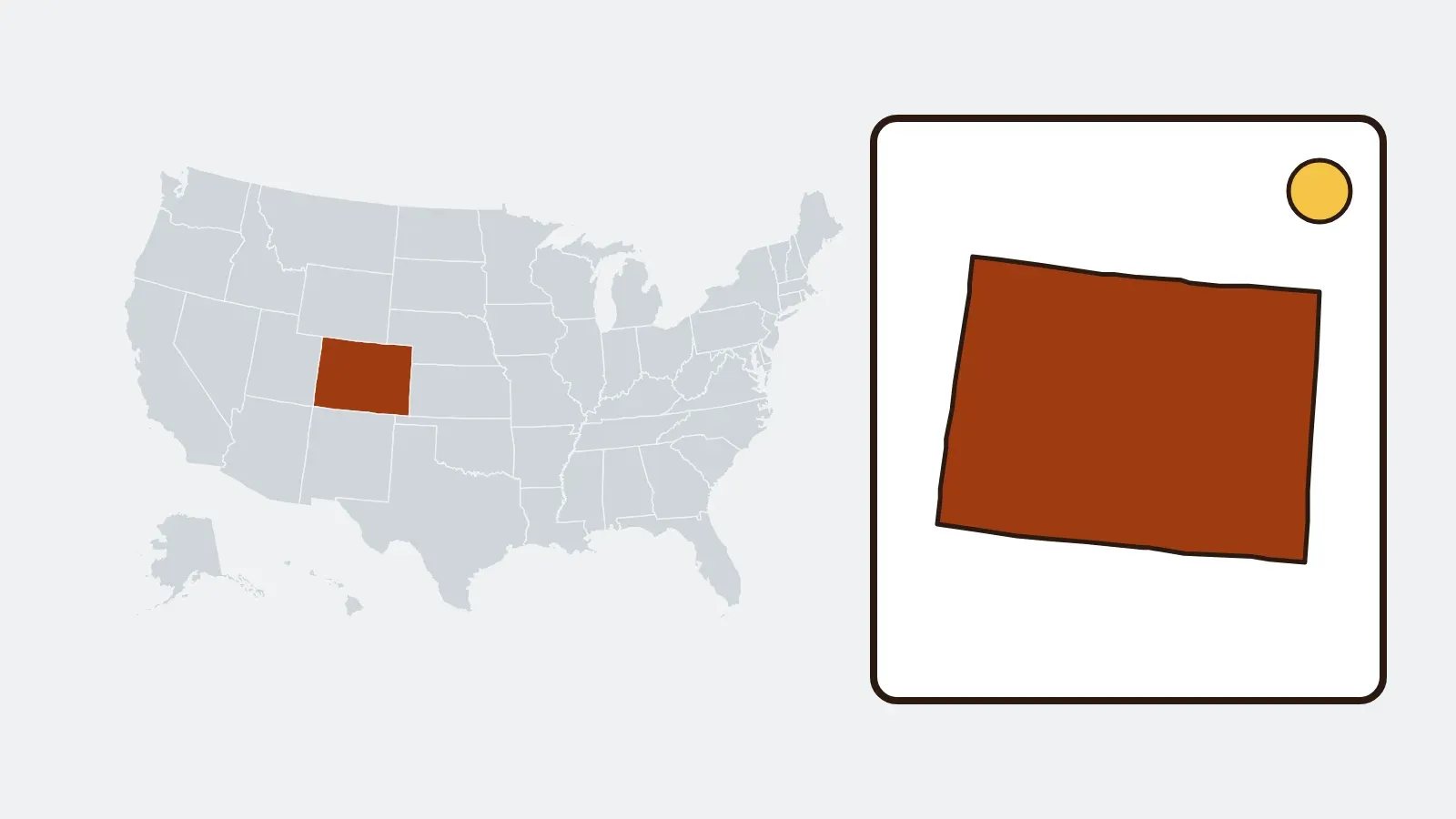
Colorado car-finance rules at a glance
- Right to cure
- Yes: 20 days after a notice, once 10 days late on a payment
- UCCC, C.R.S. §5-5-110 and §5-5-111. No new cure right for a default within 12 months of an earlier notice.
- Rate ceiling
- 21% a year, or 36%/21%/15% tiers if greater (small balances)
- UCCC §5-2-201 for consumer credit sales up to $75,000 financed. Banks and credit unions may follow other rules.
- Doc fee limit
- No cap in state law; the fee is taxable
- After repossession
- Notice before sale; you may redeem; no deficiency if cash price was $3,000 or less
- Vehicle sales tax
- 2.9% state plus local; trade-in value excluded
- Regulator
- Colorado Attorney General, Consumer Credit Unit (UCCC Administrator)
How much interest a Colorado car loan can carry
A car bought on credit for personal use is a consumer credit sale under the UCCC, Title 5 of the Colorado Revised Statutes, when the amount financed is $75,000 or less. Section 5-2-201 lets the seller charge the greater of two figures, both calculated on the unpaid balance.
| Method | Rate |
|---|---|
| Tiered | 36% on the first $1,000, 21% from $1,000 to $3,000, 15% above $3,000 |
| Flat alternative | 21% a year on the whole balance |
On a typical car balance, the flat 21% is the higher of the two, so it works as the ceiling. The tiered method allows more only on small balances: on $1,500 it permits about 31% a year. Your retail installment contract must show the APR, and that is the number to compare. A ceiling is not a typical price, so run your offer through the car payment calculator.
Fees and taxes on a Colorado car purchase
- Sales tax. The state rate is 2.9% (C.R.S. §39-26-106). Cities, counties and special districts add their own. If you register the car outside the dealer's jurisdiction, you pay local use tax to your county clerk before titling.
- Trade-in. The fair market value of a vehicle you trade in is excluded from the taxable price.
- Doc fee. We found no cap on dealer documentation fees in Colorado law. The Department of Revenue counts mandatory dealer fees, such as documentation and processing fees, as part of the taxable price.
- Optional items. GAP coverage and other optional products are not taxed when listed separately on the invoice. Financing them still adds to your balance; see our guide to add-ons.
Your right to cure and repossession in Colorado
Colorado is one of the states that require a cure notice. Under C.R.S. §5-5-110 and §5-5-111, when your only default is a missed payment, the lender may send a notice of your right to cure once you are 10 days late. Until 20 days after that notice, it cannot accelerate the balance or repossess the car.
- The cure notice. It must give the creditor's name, address and phone number, identify the contract, and state the amount and the date by which you must pay to cure.
- Catching up. Paying everything past due, plus any unpaid late or deferral charges, before the deadline puts the contract back as if you had never missed a payment.
- A second default. If you default again within 12 months of a cure notice, there is no new cure right, and the lender may act right away.
- After repossession. The lender must send notice before it sells the car, and you can redeem it until the sale by paying the full balance and costs. You usually owe any shortfall, but not if the car's cash sale price was $3,000 or less (C.R.S. §5-5-103).
The cure right does not cover other kinds of default, such as letting required insurance lapse, and it does not apply to contracts payable in four or fewer installments. If a cosigner did not receive a proper cure notice, the lender cannot demand the full balance from the cosigner or report it to a credit bureau. Our guides to repossession and falling behind explain how to use these weeks.
Where to check a lender and complain
The UCCC Administrator, part of the Colorado Attorney General's Consumer Credit Unit, licenses non-bank lenders, receives notifications from creditors such as sellers and sales finance companies, and investigates complaints. The same office licenses repossessors. Banks and credit unions are supervised by their own regulators.
Colorado Attorney General, Consumer Credit Unit
Administers the UCCC and takes complaints at 720-508-6012 or uccc@coag.gov.
Colorado Department of Revenue
Publishes the motor vehicle sales tax guide and local rate tables.
Consumer Financial Protection Bureau
Takes complaints about any auto lender or servicer, including banks and finance companies.
Questions people ask
Does Colorado give a right to cure before repossession?
Yes, for a missed payment. After you are 10 days late, the lender must send a cure notice and wait 20 days before it repossesses or accelerates. A second default within 12 months of that notice has no new cure right.
What is the maximum interest rate on a car loan in Colorado?
Under the UCCC, the greater of 21% a year or a tiered rate of 36%, 21% and 15% by balance. On a typical car balance, 21% is the ceiling.
Does Colorado cap dealer doc fees?
We found no cap in state law. Mandatory dealer fees are part of the taxable price.
Does a trade-in reduce sales tax in Colorado?
Yes. The fair market value of a traded-in vehicle is excluded from the taxable price.
Sources
- C.R.S. §5-5-111: Cure of default
- C.R.S. §5-5-110: Notice of consumer's right to cure
- C.R.S. §5-5-103: Restrictions on deficiency judgments
- C.R.S. §5-2-201: Finance charge on consumer credit transactions
- C.R.S. §5-1-301: UCCC definitions, including consumer credit sale
- Colorado Department of Revenue: Sales and use tax topics, motor vehicle sales (July 2026)
- C.R.S. §39-26-106: State sales tax rate
- Colorado Attorney General: Uniform Consumer Credit Code
Facts on this page were checked against these sources on October 26, 2026. Local sales tax rates vary by city, county and special district.
Read next
-
Help
Behind on payments
What a missed payment costs, what to ask your lender for, and when repossession becomes a risk.
-
Help
Repossession
When the lender can take the car, what an agent may not do, and how to get it back.
-
Guide
Retail installment contract
The disclosure box, the Holder Rule notice, spot delivery and arbitration clauses, and a signing checklist.