Georgia Car Loan Laws
Georgia's rate ceilings stop at $5,000 financed, dealer fees have no cap, and after a repossession the lender must write to you within 10 days.
Updated By Lenditia Editorial Team 6-minute read No right to cure
In short
Georgia's Motor Vehicle Sales Finance Act sets add-on ceilings of $10 to $17 per $100 per year by vehicle class, but they apply only when the amount financed is $5,000 or less. Above that, you and the seller may agree to any finance charge. Dealer fees have no cap. Instead of sales tax, you pay a one-time 7% title ad valorem tax on the price minus your trade-in. There is no right to cure before repossession, but the lender must mail you a notice within 10 days after taking the car or lose its claim to a deficiency.
- Right to cure
- None in state law
- Rate ceiling
- None over $5,000 financed
- Doc fee limit
- No cap in state law
- Vehicle sales tax
- 7% TAVT instead
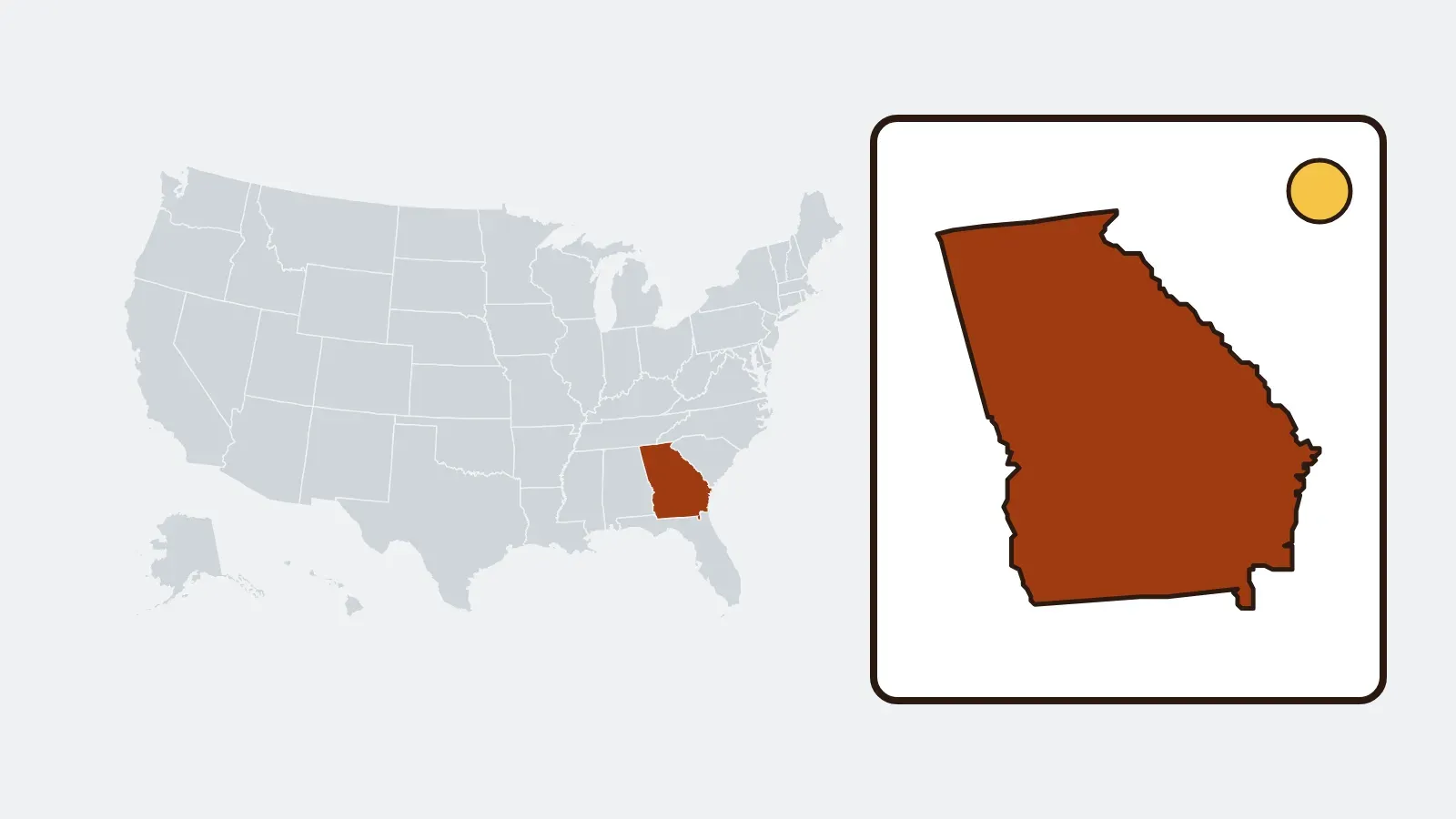
Georgia car-finance rules at a glance
- Right to cure
- None before repossession
- Georgia's 10-day notice comes after the repossession and covers redemption, not a chance to catch up beforehand.
- Rate ceiling
- $10–$17 per $100 a year by class, only up to $5,000 financed; no cap above
- O.C.G.A. §10-1-33; banks and credit unions follow their own rules.
- Doc fee limit
- No cap in state law; fee must be in the advertised price
- After repossession
- Notice within 10 days or no deficiency; right to redeem; public sale on demand
- Vehicle sales tax
- None; 7% title ad valorem tax on price minus trade-in
- New residents pay 3%.
- Regulator
- Department of Banking and Finance; no dealer-finance license
When Georgia caps the finance charge
Dealer-arranged financing in Georgia uses a retail installment contract governed by the Motor Vehicle Sales Finance Act, O.C.G.A. §10-1-30 and following. Section 10-1-33 lists four vehicle classes with add-on ceilings. The catch is in subsection (d): when the amount financed is more than $5,000, the buyer and seller may agree in writing to any finance charge.
| Vehicle class | Ceiling | About this APR at 60 months |
|---|---|---|
| Class 1: new for the sale year, or never titled | $10 per $100 a year | 17.27% |
| Class 2: other new; used up to 2 model years old | $13 per $100 a year | 21.79% |
| Class 3: used up to 4 model years old | $15 per $100 a year | 24.68% |
| Class 4: used, older than 4 model years | $17 per $100 a year | 27.50% |
The APR column is our conversion for a 60-month contract. Since most car contracts finance far more than $5,000, the practical limit for most buyers is the rate they accept. That makes comparison shopping the main protection: bring a preapproval from a bank or credit union, and look at the APR and the total of payments rather than the monthly figure alone.
Dealer fees and the title ad valorem tax
- Dealer fees. Georgia does not limit what a dealer charges in dealer, processing or documentation fees. The Attorney General's consumer office says the fee must be built into any price the dealer advertises.
- Title ad valorem tax (TAVT). Georgia replaced sales tax and the yearly vehicle property tax with a one-time tax paid when you title the car. The rate has been 7% of fair market value since July 1, 2023.
- Trade-in. On a purchase from a dealer, fair market value is the selling price minus your trade-in. On a new car, rebates come off too. The trade-in owner's name and VIN must be on the bill of sale.
- New residents. If you move to Georgia with a vehicle, the TAVT rate is 3%.
Falling behind and repossession in Georgia
Georgia law does not require a warning and a catch-up period before a lender takes the car. After a default, Georgia's version of Article 9 of the Uniform Commercial Code lets the lender repossess without going to court, as long as it does not breach the peace. The finance act then adds its own step.
- The 10-day letter. Within 10 days after the repossession, the lender must send you a notice by registered or certified mail or statutory overnight delivery. It must tell you about your right to redeem the car (§10-1-36).
- Asking for a public sale. You may demand a public sale by writing to the lender within 10 days after its notice was posted.
- Redeeming. Before the sale, you can get the car back by paying what the contract secures plus the lender's reasonable costs.
- The deficiency. A lender that skips the 10-day notice cannot recover a deficiency from you. If it follows the rules, you may still owe the gap between the sale price and the balance.
If you receive the notice, keep the envelope and note the date. Our guides to repossession and to the deficiency balance explain what to check.
Where to check a lender and complain
The finance act itself has no licensing section for companies that buy dealer contracts. The Department of Banking and Finance licenses consumer installment lenders and other non-bank finance companies, and complaints about dealers go to the Attorney General. Before you sign, ask the dealer which company will hold your contract. If a dispute comes up, write to that company first and keep copies of every letter, receipt and payment record.
Attorney General's Consumer Protection Division
Takes complaints about dealers and dealer fees at 404-651-8600.
Department of Banking and Finance
Licenses consumer installment lenders and other non-bank financial companies.
Consumer Financial Protection Bureau
Accepts complaints about any auto lender or servicer nationwide.
Questions people ask
Is there a maximum interest rate on car loans in Georgia?
Only on dealer contracts with $5,000 or less financed, where ceilings run from $10 to $17 per $100 a year by vehicle class. Above $5,000, the law lets the buyer and seller agree to any finance charge.
Do I pay sales tax on a car in Georgia?
No. You pay a one-time title ad valorem tax of 7% of fair market value. On a dealer purchase, your trade-in reduces that value.
How much can a Georgia dealer charge in doc fees?
State law sets no limit. The fee has to be included in any price the dealer advertises.
What notice do I get after a repossession in Georgia?
The lender must mail a notice within 10 days that explains your right to redeem. Without it, the lender cannot collect a deficiency. See what to do when you are behind.
Sources
- Official Code of Georgia (2025), §10-1-33: Finance charge limitations
- Official Code of Georgia (2025), §10-1-36: Disposition of repossessed vehicles
- Georgia Department of Revenue: Vehicle taxes, TAVT and annual ad valorem tax
- Official Code of Georgia (2025), §48-5C-1: Title ad valorem tax
- Georgia Attorney General, Consumer Ed: Maximum car dealer doc fees (2019)
Facts on this page were checked against these sources on October 26, 2026. The APR figures are our conversion of the statutory add-on ceilings for a 60-month contract.
Read next
-
Help
Repossession
When the lender can take the car, what an agent may not do, and how to get it back.
-
Help
Deficiency balance
How lenders compute what you owe after a repossession sale, and how to check or dispute it.
-
Guide
Retail installment contract
The disclosure box, the Holder Rule notice, spot delivery and arbitration clauses, and a signing checklist.