Maine Car Loan Laws
Maine caps dealer car financing at 18%, makes the dealer post its doc fee on the car, and gives you 14 days to catch up before repossession.
Updated By Lenditia Editorial Team 6-minute read Right to cure
In short
The Maine Consumer Credit Code (Title 9-A) sets one ceiling for cars sold on credit: 18% a year on the unpaid balance. Once you are 10 days in default, the creditor must send a notice of right to cure and wait 14 days before repossessing or demanding the full balance. Dealers may charge any documentary fee but must post it on the vehicle. If the amount financed was $2,800 or less, you owe nothing more after a repossession. The Bureau of Consumer Credit Protection administers the Code.
- Right to cure
- 14 days after a notice
- Rate ceiling
- 18% a year
- Doc fee limit
- No cap; must be posted
- Vehicle sales tax
- 5.5%
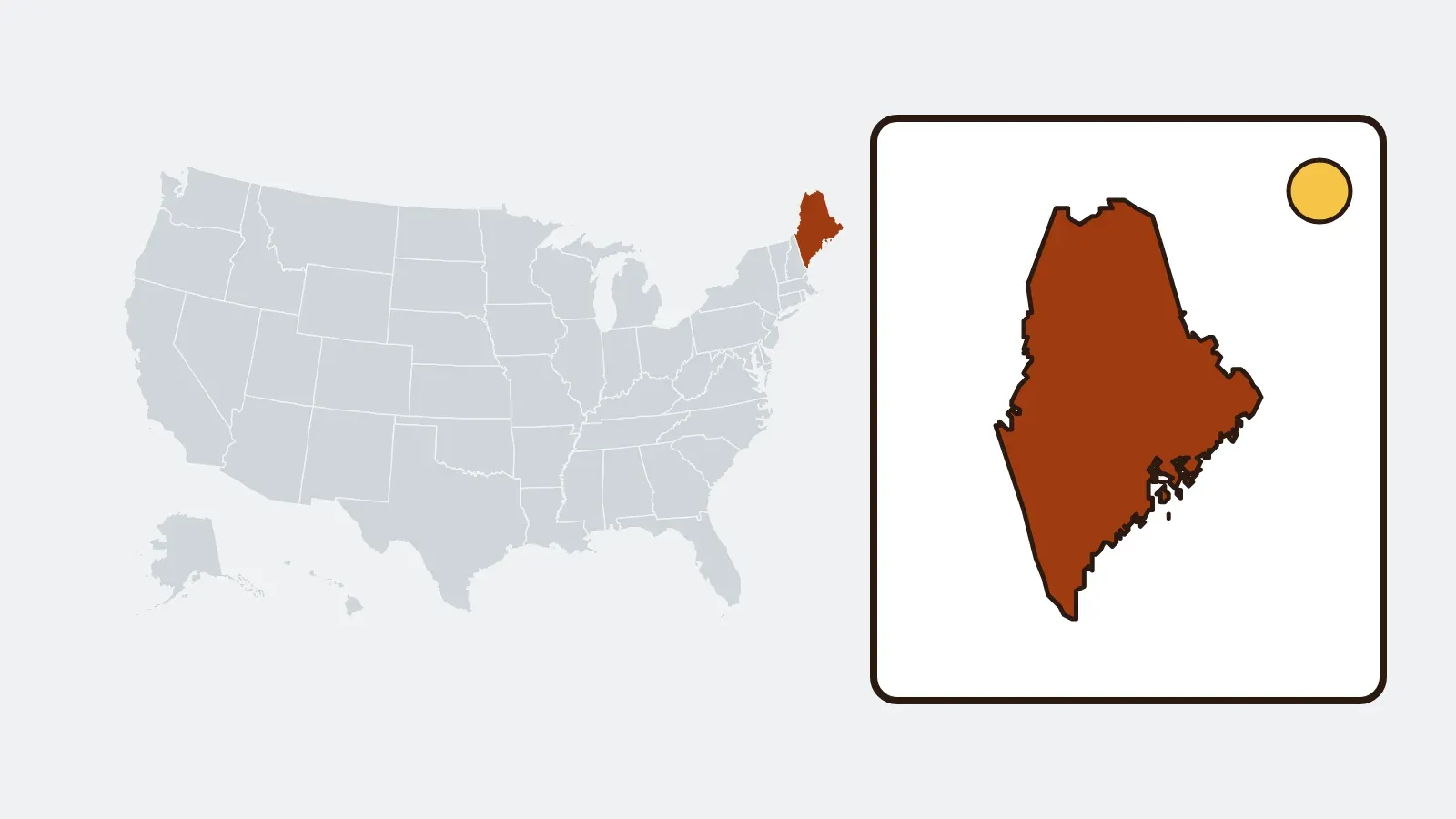
Maine car-finance rules at a glance
- Right to cure
- Yes: 14 days after a notice, once 10 days in default
- 9-A M.R.S. §§5-110 and 5-111. No new notice is needed for another default within 12 months.
- Rate ceiling
- 18% a year on motor vehicle credit sales, new or used
- 9-A M.R.S. §2-201(9-A); banks, credit unions and direct lenders follow other rules.
- Doc fee limit
- No cap in state law; the fee must be posted on the vehicle
- After repossession
- No deficiency if $2,800 or less was financed; otherwise notice before sale
- Vehicle sales tax
- 5.5% of the price minus a vehicle trade-in
- Regulator
- Bureau of Consumer Credit Protection
How much interest a Maine car contract can carry
For a retail installment contract signed at a dealership, 9-A M.R.S. §2-201(9-A) limits the finance charge on a motor vehicle to 18% a year on the unpaid balance of the amount financed. The cap is the same for new and used cars and does not change with the model year.
- One ceiling for cars. Other consumer goods use a sliding scale of 30%, 21% and 15% by balance or an 18% flat rate, but motor vehicles sold since 1994 are held to 18%.
- Direct loans. Banks, credit unions and licensed lenders that lend to you directly follow their own rules under the Code and their charters.
- Your APR. The contract must show the APR. Compare it with a preapproval before you sign.
A rate at the cap costs real money over a long term. Put the APR and term into the car payment calculator and look at the total interest. A lower rate from your own bank or credit union is one direct way to cut that figure.
Fees and taxes on a Maine purchase
- Document fee. Maine sets no dollar limit, but 29-A M.R.S. §953-A requires the dealer to post any document preparation fee on each vehicle it sells. Failing to post it is evidence of an unfair trade practice.
- Sales tax. The general rate is 5.5%. Maine Revenue Services treats documentation and processing fees as part of the taxable sale price.
- Trade-in. When you trade a vehicle for a vehicle, tax applies only to the difference between the sale price and the trade-in value. Trailers and long-term leases do not get this credit.
- Rebates. A manufacturer's rebate does not reduce the taxable price, while a discount the dealer gives you does.
What happens if you fall behind in Maine
Under 9-A M.R.S. §5-109, a payment default means failing to pay at least the amount of an average installment when due. Sections 5-110 and 5-111 then require a cure notice before the creditor acts. The Code covers car credit sales with an amount financed up to $50,000, a figure adjusted for inflation.
- The notice. After you have been in default for 10 days, the creditor may mail a notice of right to cure. For a car loan it must also explain repossession and your possible liability for a deficiency.
- Fourteen days. For 14 days after the notice, the creditor may not repossess or demand the full balance. Paying the missed amounts and any late charges restores the contract.
- Repeat defaults. If you default again within 12 months of the earlier default, the creditor may act without a new notice.
- Small balances. If the amount financed was $2,800 or less, repossession ends your liability: you owe no deficiency (9-A M.R.S. §5-103).
- Larger balances. The creditor must send notice before selling the car and sell it in a commercially reasonable way. You may redeem the car until the sale.
If you are close to missing a payment, read what to do when you fall behind and how repossession works.
Where to check a lender and complain
The Superintendent of Consumer Credit Protection heads the Bureau of Consumer Credit Protection, which administers the Maine Consumer Credit Code within the Department of Professional and Financial Regulation.
Bureau of Consumer Credit Protection
Administers the Maine Consumer Credit Code and handles complaints about consumer creditors.
Maine Attorney General
Handles complaints about unfair trade practices by car dealers.
Consumer Financial Protection Bureau
Takes complaints about any auto lender or servicer, including banks and finance companies.
Questions people ask
What is the maximum interest rate on a dealer car loan in Maine?
18% a year on the unpaid balance for motor vehicles, under 9-A M.R.S. §2-201(9-A). The same cap applies to new and used cars.
How long do I have to catch up before repossession in Maine?
14 days after the creditor gives you a notice of right to cure, which it may send once you have been in default for 10 days. A second default within 12 months may not get a new notice.
Is there a cap on dealer doc fees in Maine?
No dollar cap, but the dealer must post the fee on the vehicle, and the fee is subject to sales tax.
Will I owe money after my car is repossessed in Maine?
Not if the amount financed was $2,800 or less. Above that, you may owe the difference after a commercially reasonable sale. See our guide to deficiency balances.
Sources
- 9-A M.R.S. §2-201: Finance charge for consumer credit sales
- 9-A M.R.S. §5-110: Notice of consumer's right to cure
- 9-A M.R.S. §5-111: Cure of default
- 9-A M.R.S. §5-103: Restrictions on deficiency judgments
- 9-A M.R.S. §1-301: Definitions, including the $50,000 limit
- 29-A M.R.S. §953-A: Document fees
- Maine Revenue Services: Instructional Bulletin 24, Vehicle dealers (rev. December 2025)
- 36 M.R.S. §1811: Sales tax rates
Facts on this page were checked against these sources on October 26, 2026.
Read next
-
Help
Behind on payments
What a missed payment costs, what to ask your lender for, and when repossession becomes a risk.
-
Help
Deficiency balance
How lenders compute what you owe after a repossession sale, and how to check or dispute it.
-
Guide
Retail installment contract
The disclosure box, the Holder Rule notice, spot delivery and arbitration clauses, and a signing checklist.