Massachusetts Car Loan Laws
Massachusetts caps dealer financing at 21% APR, gives you 21 days to cure a default, and measures any deficiency against the car's fair market value.
Updated By Lenditia Editorial Team 6-minute read Right to cure
In short
Chapter 255B of the Massachusetts General Laws governs cars bought on installment. A dealer contract may carry no more than 21% APR on a new or used vehicle. If you miss a payment, the creditor must wait at least 10 days, send a notice and then give you 21 days to catch up before it repossesses. After a repossession, any deficiency is figured from the car's fair market value, not the auction price, and there is no deficiency at all on balances under $2,000. The Division of Banks licenses sales finance companies.
- Right to cure
- 21 days after a notice
- Rate ceiling
- 21% APR
- Doc fee limit
- No cap in state law
- Vehicle sales tax
- 6.25%
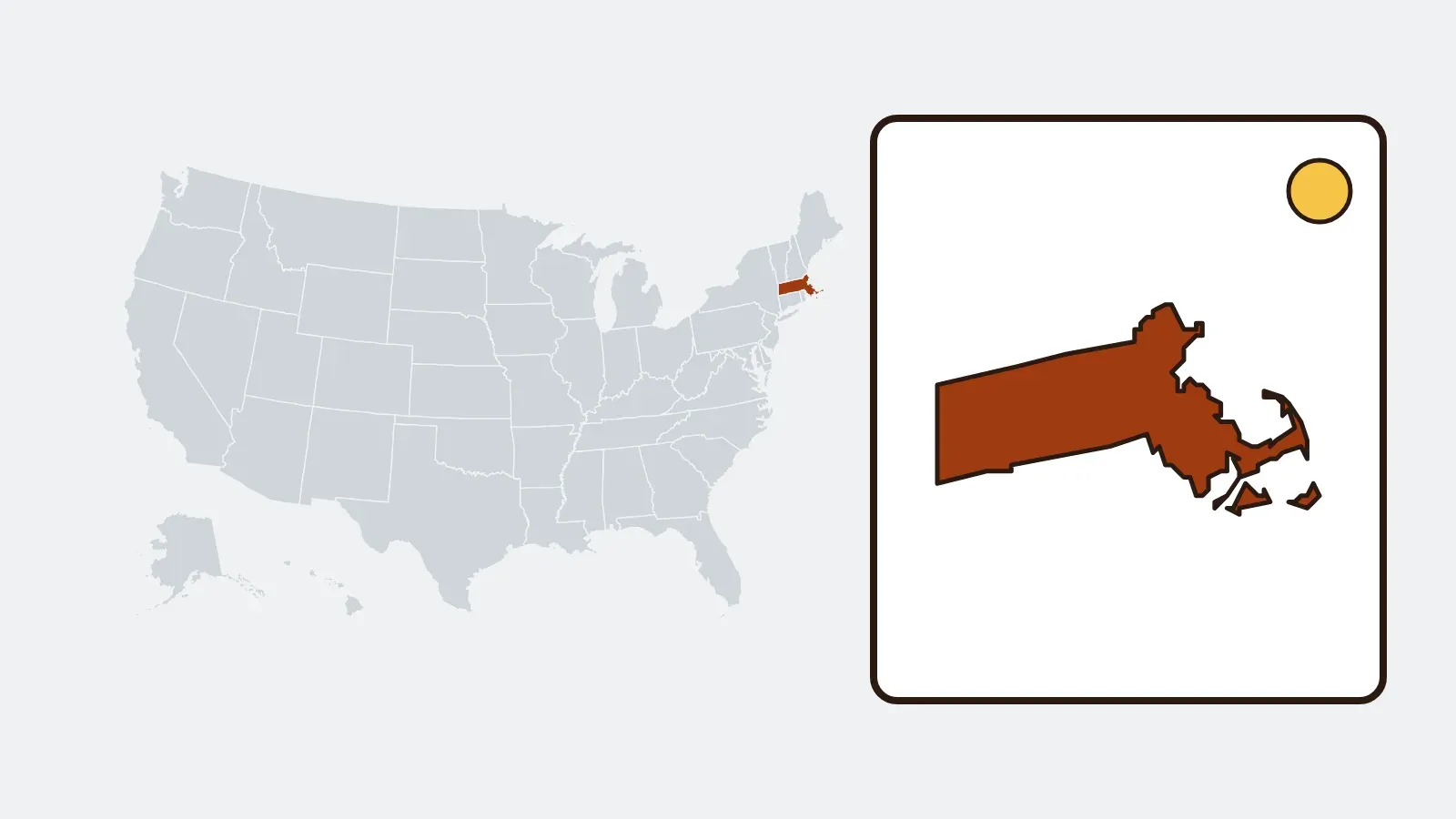
Massachusetts car-finance rules at a glance
- Right to cure
- Yes: 21 days after a notice sent at least 10 days after default
- G.L. c. 255B, §20A. No notice is required once you have cured after a notice three times.
- Rate ceiling
- 21% APR on any new or used motor vehicle
- Dealer contracts under G.L. c. 255B, §14; banks and credit unions follow their own rules.
- Doc fee limit
- No cap in state law; title preparation fee limited to $5; doc fee is taxable
- After repossession
- 20 days to redeem; deficiency based on fair market value; none if balance under $2,000
- Vehicle sales tax
- 6.25% of the price minus trade-in at a dealer; no trade-in credit in private sales
- Regulator
- Division of Banks
How much interest a Massachusetts car contract can carry
Section 14 of Chapter 255B lets a retail seller charge a finance charge of up to 21% APR on any new or used motor vehicle. The same ceiling applies whatever the model year. It covers the retail installment contract you sign at the dealership; banks and credit unions that lend to you directly follow their own rules.
- Ceiling, not price. Borrowers with good credit are usually offered much less than 21%.
- Compare the APR. Get a preapproval before you shop so you can judge the dealer's offer.
- See the dollar cost. Run the rate and term through the car payment calculator to see the total interest.
Fees and taxes at a Massachusetts dealership
- Documentary fee. No state statute sets a dollar cap on a dealer's document preparation fee. The Department of Revenue treats it as part of the taxable sale price, whether you pay it upfront or finance it.
- Title preparation fee. A separate title preparation charge is limited to $5 under G.L. c. 90D, §33.
- Sales tax. The rate is 6.25% of the sale price, and the Department of Revenue guidance for vehicles lists no local add-on.
- Trade-in. When you buy from a registered dealer, tax applies to the price minus the trade-in, provided tax was paid on the trade-in or it was exempt. In a private sale, a trade-in does not reduce the tax, and the tax is based on the greater of the price or the vehicle's clean trade-in value.
What happens if you fall behind in Massachusetts
Chapter 255B, §20A, protects buyers who miss payments or let the collateral lose substantial value. A default must be material before the creditor can act on it.
- The cure notice. No sooner than 10 days after the default, the creditor must send you a written notice of the amount due.
- Twenty-one days. You have 21 days from the mailing to pay the past-due amount and any late charges. Until then, the creditor may not repossess, sue or demand the full balance.
- A limit on notices. Each new default needs a new notice, but once you have cured after a notice three times, the creditor may act without another one.
- Repossession. The agent may not use force or threats or enter your property without consent, and must notify local police within one hour of taking the car.
- Twenty days to redeem. After the repossession, you can get the car back within 20 days by paying the full debt plus the creditor's reasonable expenses.
- The deficiency. Under §20B, what you owe is the unpaid balance minus the car's fair market value, plus reasonable repossession and storage costs. If the unpaid balance was under $2,000, you owe nothing more.
If the fair market value is higher than what you owe, the surplus is yours. Our guides on repossession and deficiency balances explain how to check the creditor's numbers.
Where to check a lender and complain
Under Chapter 255B, any company other than a bank or credit union needs a license from the Division of Banks to act as a sales finance company. Dealers that immediately assign contracts to a bank or licensed finance company may not need one.
Division of Banks
Licenses motor vehicle sales finance companies and issues guidance on Chapter 255B.
Massachusetts Attorney General
Publishes repossession guidance and takes consumer complaints about car sales and financing.
Consumer Financial Protection Bureau
Takes complaints about any auto lender or servicer, including banks and finance companies.
Questions people ask
What is the maximum interest rate on a dealer car loan in Massachusetts?
21% APR on any new or used motor vehicle, under G.L. c. 255B, §14.
Do I get a warning before my car is repossessed in Massachusetts?
Yes. The creditor must wait at least 10 days after a default, send a notice and give you 21 days to cure. After you have cured following a notice three times, it no longer has to send one.
How is a deficiency calculated in Massachusetts?
It is the unpaid balance minus the car's fair market value, plus reasonable repossession and storage costs. If the unpaid balance was under $2,000, there is no deficiency.
Does a trade-in lower the sales tax in Massachusetts?
Yes, when you buy from a registered dealer. The 6.25% applies to the price minus the trade-in. A trade-in does not reduce the tax in a private sale.
Sources
- Mass. G.L. c. 255B, §20A: Default, notice and right to cure
- Mass. G.L. c. 255B, §20B: Repossession, redemption and deficiency
- Mass. G.L. c. 255B, §14: Finance charge ceiling
- Massachusetts Attorney General: What to know if your car is repossessed
- Massachusetts DOR: Motor vehicle and trailer sales and use tax
- Massachusetts DOR: Directive 14-1, Document and title preparation fees (2014)
- Massachusetts Division of Banks: Opinion 21-003 on sales finance company licensing (2021)
Facts on this page were checked against these sources on October 26, 2026.
Read next
-
Help
Deficiency balance
How lenders compute what you owe after a repossession sale, and how to check or dispute it.
-
Help
Behind on payments
What a missed payment costs, what to ask your lender for, and when repossession becomes a risk.
-
Guide
Retail installment contract
The disclosure box, the Holder Rule notice, spot delivery and arbitration clauses, and a signing checklist.