Michigan Car Loan Laws
Michigan caps dealer financing at 25% a year, limits the doc fee to $280, and lets a lender repossess without warning once you default.
Updated By Lenditia Editorial Team 6-minute read No right to cure
In short
When a Michigan dealer arranges your loan, the finance charge can run up to 25% a year, the limit the Motor Vehicle Sales Finance Act borrows from the Credit Reform Act. The documentary fee is capped at $280 or 5% of the cash price, whichever is less. You pay 6% sales tax with no local add-on, and in 2026 a trade-in lowers the taxable price by up to $12,000. Michigan law gives no right to cure, so a lender can repossess after one default. The Department of Insurance and Financial Services (DIFS) licenses dealers and companies that finance cars.
- Right to cure
- None in state law
- Rate ceiling
- 25% a year
- Doc fee limit
- $280 or 5% of price
- Vehicle sales tax
- 6%, no local tax
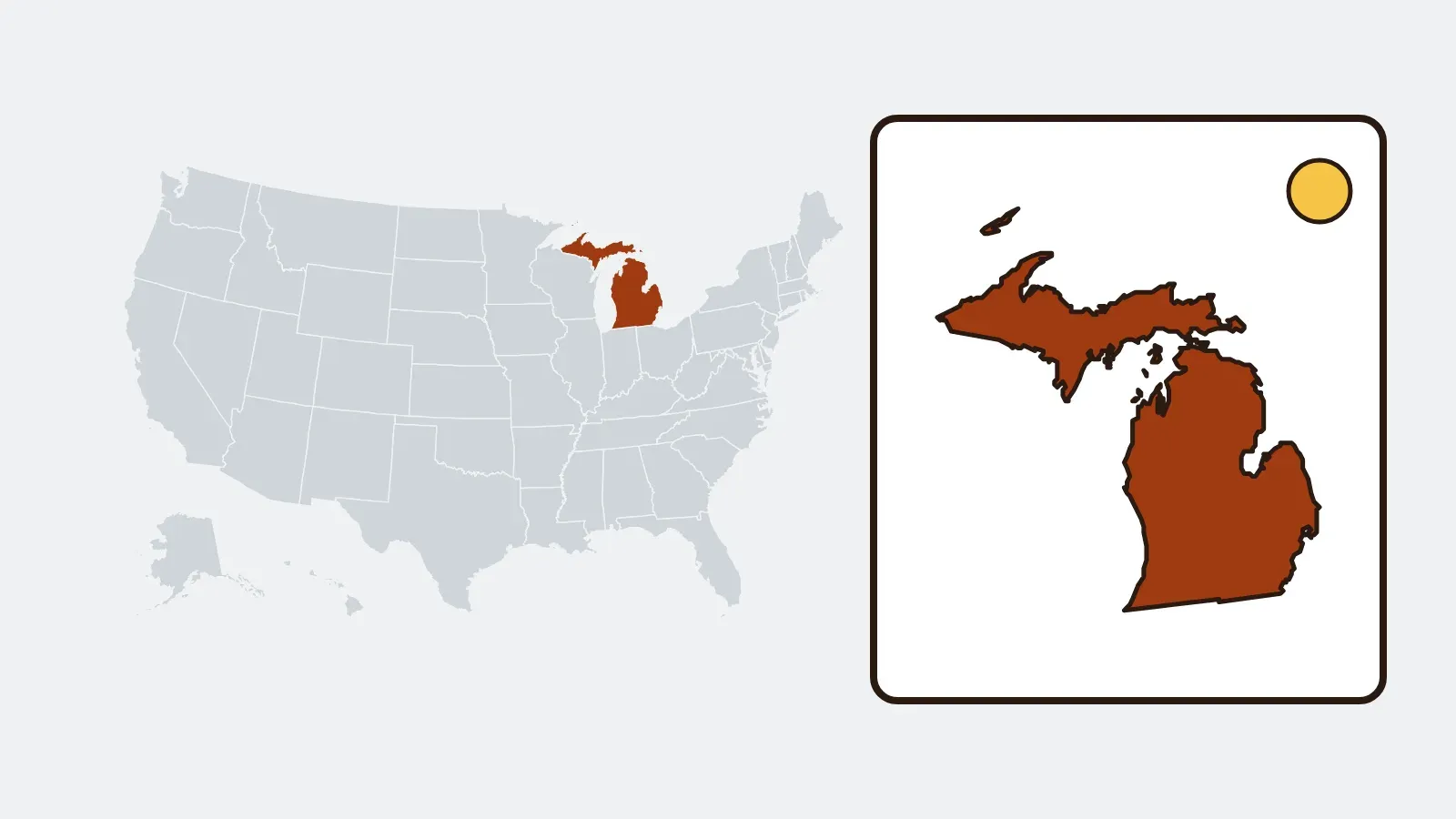
Michigan car-finance rules at a glance
- Right to cure
- None in state law; the contract defines default
- Rate ceiling
- 25% a year on dealer installment contracts, any model year
- MCL 492.118 and 445.1854 apply to licensed sellers; banks and credit unions lending directly follow their own rules.
- Doc fee limit
- Lesser of $280 or 5% of the cash price (set January 2025)
- DIFS adjusts the cap for inflation every two years under MCL 492.113(2)(a); the next adjustment is due in 2027.
- After repossession
- Notice before sale; you may redeem until the sale; deficiency allowed
- Vehicle sales tax
- 6%, no local tax; trade-in credit up to $12,000 in 2026
- The trade-in limit rises $1,000 a year and is removed from January 1, 2029 (MCL 205.51).
- Regulator
- Department of Insurance and Financial Services (DIFS)
How much interest a Michigan dealer contract can carry
A retail installment contract signed at a Michigan dealership falls under the Motor Vehicle Sales Finance Act. Section 492.118 of the Michigan Compiled Laws ties the finance charge to the rate the Credit Reform Act permits, and section 445.1854 sets that rate at no more than 25% per year. The ceiling is the same for a new car and a ten-year-old one.
- One ceiling for every model year. Michigan does not use age classes, so an older car does not unlock a higher legal rate.
- Small minimum charge. A seller may charge a $15 minimum finance charge when the computed charge would be lower.
- APR on the contract. The seller must disclose the annual percentage rate under federal Truth in Lending rules. Compare offers by that number.
The 25% figure is a legal limit, not a typical price. Banks and credit unions that lend to you directly follow their own rules. To see what a given rate costs in dollars, run it through the car payment calculator.
Fees and taxes at a Michigan dealership
| Item | Rule | Where it comes from |
|---|---|---|
| Documentary preparation fee | $280 or 5% of the cash price, whichever is less | MCL 492.113(2)(a), DIFS Bulletin 2025-03-CF |
| Sales tax | 6% of the price; no city or county sales tax | General Sales Tax Act |
| Trade-in credit | Up to $12,000 of trade-in value in 2026 | MCL 205.51(1)(d)(xii) |
DIFS adjusts the doc fee cap every two years for inflation. It raised the cap to $280 in January 2025, so the next change is due in 2027. The trade-in credit applies when you trade a vehicle to a dealer, and the dealer must show it on the bill of sale. The limit rises by $1,000 each January and disappears once it would pass $14,000, which under the statute happens on January 1, 2029.
Falling behind on a car loan in Michigan
No Michigan statute requires the lender to send a notice and give you time to catch up before it acts. Your contract decides when you are in default. The old repossession sections of the Motor Vehicle Sales Finance Act were repealed in 1964, so the Uniform Commercial Code, Article 9, now governs what happens next.
- Taking the car. After default the lender may repossess without a court order if it avoids a breach of the peace (MCL 440.9609).
- Notice before the sale. The lender must send a written notice telling you how and when it will sell the car (MCL 440.9611 to 440.9614).
- Redemption. Until the car is sold or the lender contracts to sell it, you can get it back by paying everything owed plus reasonable costs (MCL 440.9623).
- Any shortfall. If the sale brings less than the balance and costs, the lender can ask you for the difference, called a deficiency.
Our guides to repossession and the balance left after a sale walk through each step. If you made a payment on the loan before you entered active military duty, federal law bars the lender from repossessing without a court order. Ask for your personal belongings left in the car in writing and keep a copy of the request.
Where to check a lender and complain
Dealers that sell on installment contracts and the finance companies that buy those contracts are licensed under the Motor Vehicle Sales Finance Act and supervised by DIFS. Banks and credit unions answer to their own regulators, and the federal consumer bureau takes complaints about any auto lender.
Department of Insurance and Financial Services
Licenses installment sellers and sales finance companies and sets the doc fee cap every two years.
Michigan Attorney General
Takes consumer complaints about dealers and runs the state's lemon law information for new vehicles.
Consumer Financial Protection Bureau
Handles complaints about any auto lender or servicer, including banks and finance companies.
Questions people ask
What is the highest interest rate a Michigan car dealer can charge?
A licensed seller may charge up to 25% a year on a motor vehicle installment contract. The limit does not change with the age of the car.
How much can a Michigan dealer charge for a doc fee?
No more than $280 or 5% of the cash price of the car, whichever is less. DIFS set the $280 figure in January 2025.
Does my trade-in reduce Michigan sales tax?
Yes, up to a limit. In 2026 the first $12,000 of trade-in value is not taxed when you trade to a dealer. The limit goes away in 2029.
Will I get a warning before my car is repossessed in Michigan?
Not under state law. Michigan has no right-to-cure notice, but the lender must notify you before it sells the car. See what to do when you fall behind.
Sources
- Michigan Legislature: MCL 492.118, finance charge on motor vehicle installment contracts
- Michigan Legislature: MCL 445.1854, Credit Reform Act rate limit
- Michigan DIFS: Bulletin 2025-03-CF, documentary preparation fee maximum (January 2025)
- Michigan Legislature: MCL 205.51, General Sales Tax Act definitions and trade-in limit
- Michigan Department of Treasury: Sales and use tax
- Michigan Legislature: MCL 440.9609, secured party's right to take possession
- Michigan Legislature: MCL 440.9623, right to redeem collateral
Facts on this page were checked against these sources on October 26, 2026. DIFS is due to reset the doc fee cap in 2027.
Read next
-
Guide
Retail installment contract
The disclosure box, the Holder Rule notice, spot delivery and arbitration clauses, and a signing checklist.
-
Help
Repossession
When the lender can take the car, what an agent may not do, and how to get it back.
-

Guide
Out-the-door price
Every line from vehicle price to amount financed: doc fees, sales tax, add-ons and the trade-in.