Minnesota Car Loan Laws
Minnesota sets dealer financing ceilings by the age of the car, caps the doc fee at $350, and protects small loans from deficiency claims.
Updated By Lenditia Editorial Team 6-minute read No right to cure
In short
A Minnesota dealer contract can carry up to 18% a year on a current or last-year model, 19.75% on a car two or three model years old and 23.25% on anything older. Since July 1, 2025, the documentary fee is capped at $350 or 10% of the sale, whichever is less. You pay 6.875% motor vehicle sales tax on the price minus your trade-in. Minnesota gives no right to cure before repossession, but when the credit was $8,100 or less, the lender cannot collect a deficiency after taking the car. The Department of Commerce licenses sales finance companies.
- Right to cure
- None in state law
- Rate ceiling
- 18% to 23.25% by age
- Doc fee limit
- $350 or 10% of price
- Vehicle sales tax
- 6.875%
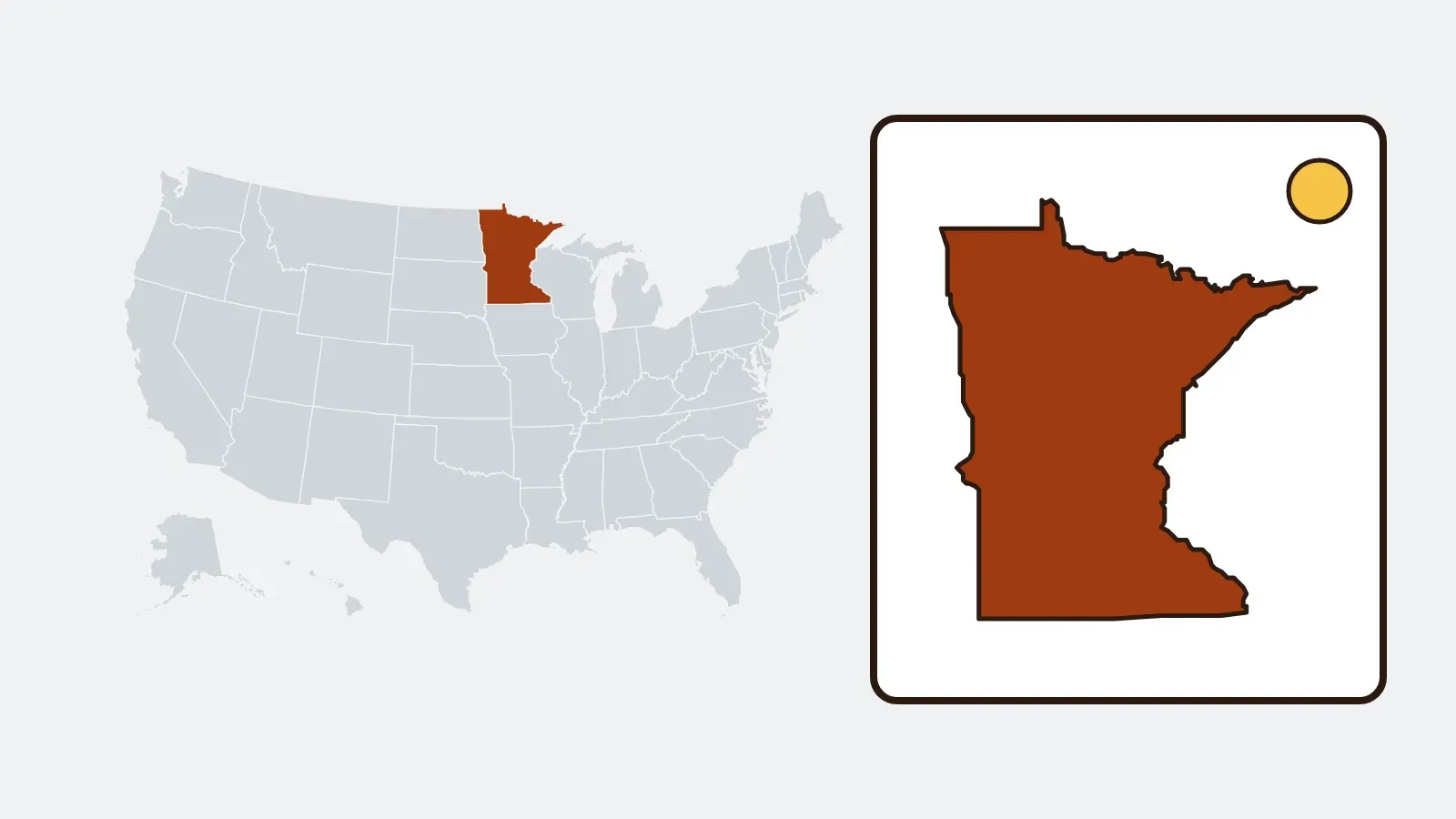
Minnesota car-finance rules at a glance
- Right to cure
- None in state law; the contract defines default
- Rate ceiling
- 18% (0–1 model years old), 19.75% (2–3 years), 23.25% (older)
- Minn. Stat. 53C.09 for dealer contracts; banks and credit unions lending directly follow their own rules.
- Doc fee limit
- Lesser of $350 or 10% of the sale, since July 1, 2025
- Fixed in Minn. Stat. 168.27, subd. 31 (2023 law); not indexed; must be listed separately on the sales agreement.
- After repossession
- Notice before sale; redemption; no deficiency if credit was $8,100 or less
- Minn. Stat. 325G.22 covers consumer purchase-money credit; above the threshold the UCC deficiency rules apply.
- Vehicle sales tax
- 6.875% of the price minus trade-in; $20 local excise in some areas
- Regulator
- Minnesota Department of Commerce
How much interest a Minnesota car contract can carry
The Motor Vehicle Retail Installment Sales Act, now chapter 53C of Minnesota Statutes, governs the retail installment contract you sign when a dealer arranges your financing. Section 53C.09 sorts cars into three classes by model year, counted from the year of the sale, and sets a simple annual rate for each.
| Class | Model year compared with the year of sale | Ceiling |
|---|---|---|
| Class 1 | Same year or one year older | 18% a year |
| Class 2 | Two or three years older | 19.75% a year |
| Class 3 | Any other vehicle | 23.25% a year |
For a sale in 2026, a 2025 model is Class 1 and a 2023 model is Class 2. A dealer may use the general credit statute, section 47.59, instead, but its motor vehicle rules list the same three ceilings. Banks and credit unions that lend to you directly follow their own rules. Check what any rate costs with the car payment calculator.
Fees and taxes on a Minnesota car purchase
- Documentary fee. For sales and leases from July 1, 2025, the dealer may charge no more than $350 or 10% of the sale, whichever is less. The fee must appear as its own line on the sales agreement (Minn. Stat. 168.27, subd. 31).
- Motor vehicle sales tax. The state rate is 6.875% of the purchase price. When you trade a car to a licensed dealer, its value comes off the price before the tax is figured.
- Local tax. City and county sales taxes do not apply to vehicles. Some cities and counties charge a $20 local vehicle excise tax instead, collected by the dealer.
- Older, low-value cars. A passenger car at least 10 model years old that sells for under $3,000, and whose average value is also under $3,000, is taxed a flat $10.
- Late charges. If the contract allows it, an installment paid 10 or more days late can draw a charge of 5% of the payment or $5, whichever is greater.
Falling behind on a car loan in Minnesota
Chapter 53C does not give you a notice of default or a set period to catch up before the lender acts, and Minnesota has no general right-to-cure statute for car loans of the kind some states have. Your contract defines default, and Article 9 of the Uniform Commercial Code, codified in chapter 336, sets most of the repossession rules.
- Taking the car. After default the lender may repossess without going to court, as long as it does not breach the peace (Minn. Stat. 336.9-609).
- Notice before the sale. The lender must send you notice before it sells the car (Minn. Stat. 336.9-611).
- Redemption. Until the car is sold or the lender contracts to sell it, you can get it back by paying everything secured by the car plus reasonable expenses (Minn. Stat. 336.9-623).
- Deficiency limit. If the credit extended was $8,100 or less, you owe nothing more once the car is repossessed or surrendered, and the lender need not resell it (Minn. Stat. 325G.22).
On a larger loan the lender can still sue for the balance left after the sale. Our guides to repossession and voluntary surrender explain your options at each step.
Where to check a lender and complain
No one may run a sales finance company in Minnesota without a license from the commissioner of commerce. Banks and credit unions are exempt from that license and answer to their own regulators. Section 53C.04 lets a buyer bring a complaint about a contract to the commissioner.
Minnesota Department of Commerce
Licenses sales finance companies, examines them and takes buyer complaints under chapter 53C.
Minnesota Attorney General
Takes consumer complaints about dealer sales practices and advertising.
Consumer Financial Protection Bureau
Handles complaints about any auto lender or servicer, including banks and finance companies.
Questions people ask
What is the maximum car loan interest rate in Minnesota?
For dealer-arranged contracts, 18% a year on a current or last-year model, 19.75% on a car two or three model years old and 23.25% on older vehicles.
How much can a Minnesota dealer charge for a doc fee?
Since July 1, 2025, no more than $350 or 10% of the sale price, whichever is less.
Do I pay sales tax on my trade-in value in Minnesota?
No. When you trade a car to a licensed dealer, its value is subtracted before the 6.875% motor vehicle sales tax is applied.
Can a lender sue me after repossession in Minnesota?
Only if the credit extended was more than $8,100. At or below that amount, the repossession ends what you owe. See deficiency balances.
Sources
- Minnesota Statutes 53C.09: Finance charge limits on motor vehicle installment sales
- Minnesota Statutes chapter 53C: Motor vehicle retail installment sales (full text)
- Minnesota Statutes 47.59: Financial institution loans and credit sales
- Minnesota Statutes 168.27: Dealer licenses, subdivision 31 on documentary fees
- Minnesota Statutes 297B.02 and 297B.01: Motor vehicle sales tax rate and purchase price
- Minnesota Driver and Vehicle Services: Vehicle sales tax
- Minnesota Department of Revenue: Motor vehicle sales guide
- Minnesota Statutes 325G.22: Limits on buyer's liability
- Minnesota Statutes 336.9-623: Right to redeem collateral
Facts on this page were checked against these sources on October 26, 2026. The $8,100 deficiency threshold is the figure printed in the current statute.
Read next
-
Guide
Retail installment contract
The disclosure box, the Holder Rule notice, spot delivery and arbitration clauses, and a signing checklist.
-
Help
Repossession
When the lender can take the car, what an agent may not do, and how to get it back.
-
Help
Deficiency balance
How lenders compute what you owe after a repossession sale, and how to check or dispute it.