South Carolina Car Loan Laws
South Carolina gives car buyers a notice and 20 days to catch up before repossession, makes dealers file their closing fees, and caps the tax-like fee at $500.
Updated By Lenditia Editorial Team 6-minute read Right to cure
In short
South Carolina's Consumer Protection Code gives you a right to cure: after you are 10 days late, the creditor must send a notice and wait 20 days before it repossesses or demands the full balance. The finance charge may not exceed 18% unless the creditor files and posts a higher rate schedule with the Department of Consumer Affairs. A dealer closing fee of up to $225 is treated as approved once filed. Instead of sales tax, you pay a 5% infrastructure maintenance fee capped at $500.
- Right to cure
- 20 days after notice
- Rate ceiling
- 18% unless rates filed
- Doc fee limit
- $225 deemed approved
- Vehicle sales tax
- 5% fee, $500 max
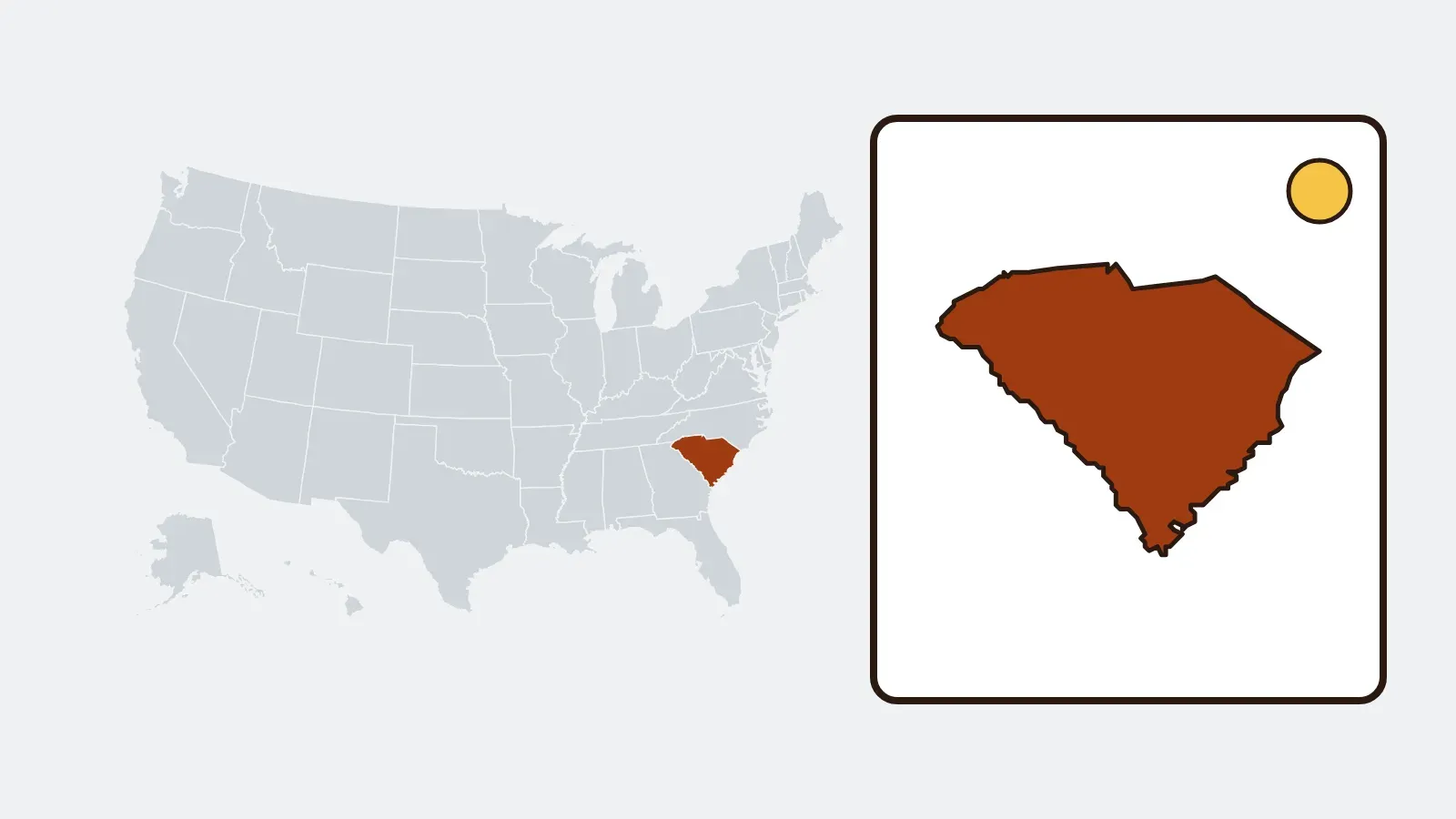
South Carolina car-finance rules at a glance
- Right to cure
- Yes: 20 days after a notice, once 10 days in default; one notice per contract
- S.C. Code §§37-5-110 and 37-5-111; a repossession in violation is void.
- Rate ceiling
- 18% unless the creditor files and posts a higher rate schedule
- S.C. Code §§37-2-201 and 37-2-305; filings go to the Department of Consumer Affairs each year.
- Doc fee limit
- Closing fee must be filed; up to $225 deemed approved; must be posted
- S.C. Code §37-2-307; a fee above $225 may be reviewed for reasonableness.
- After repossession
- No breach of peace; no deficiency if cash price was $1,500 or less
- Vehicle sales tax
- None; 5% infrastructure maintenance fee capped at $500
- Replaces state and local sales tax; $250 for vehicles moving in from another state.
- Regulator
- Department of Consumer Affairs; Board of Financial Institutions (lenders)
How South Carolina limits finance charges
A car bought on credit from a dealer is a consumer credit sale under Title 37 of the South Carolina Code. Section 37-2-201 limits the credit service charge to the greater of 18% a year on the unpaid balance or any rate the creditor has filed and posted under section 37-2-305.
- Rate schedule filing. A creditor that wants to charge more than 18% must file a maximum rate schedule with the Department of Consumer Affairs and post it at each place of business.
- Yearly renewal. The filing is due each year before January 31. A creditor that misses it is held to 18% on new credit until it files again.
- No fixed upper number. The code sets no hard ceiling above the filed rate, so the posted schedule is the limit to ask about.
Because the filed rate can be high, read the APR on your retail installment contract and compare it with a credit union or bank offer. The car payment calculator shows what each rate costs in dollars.
Closing fees and the infrastructure fee
- Closing fee. This is South Carolina's name for the doc fee: a charge to recover the dealer's costs of transferring and delivering the car (§37-2-307). The dealer must file its maximum closing fee with the Department of Consumer Affairs before charging it.
- $225 threshold. A filed fee of $225 or less per vehicle is considered approved. A higher fee may be reviewed by the department for reasonableness.
- Disclosure. The fee must appear on the sale or lease contract, be posted in a conspicuous spot at the dealership, and be disclosed in ads for a specific vehicle.
- Infrastructure maintenance fee. When you first title or register a vehicle, you pay 5% of the sales price, capped at $500 (§56-3-627). Vehicles subject to the fee are exempt from state and local sales and use taxes.
- Moving in. A vehicle already titled or registered in another state pays a flat $250 fee instead, with exceptions for active-duty service members and their families.
Your right to cure and repossession in South Carolina
South Carolina's right to cure applies to consumer credit payable in installments, which covers a typical dealer car contract. Sections 37-5-110 to 37-5-112 set the steps.
- Notice after 10 days. Once you have been in default for 10 days for a missed payment, the creditor may deliver or mail a notice of your right to cure.
- 20 days to catch up. The creditor may not accelerate the debt or repossess until 20 days after the notice is given. A repossession that breaks this rule is void, and the creditor is liable for conversion.
- One notice per contract. After a creditor has given one cure notice on an obligation, later defaults on it carry no new right to cure.
- Peaceful repossession only. Without a court order, the creditor may take the car only without entering a dwelling and without force or other breach of the peace (§37-5-112).
- Deficiency limits. You owe a deficiency only if the creditor sold the car in good faith and in a commercially reasonable manner. If the cash price of the car was $1,500 or less, the seller cannot collect one at all (§37-5-103).
Our guides to falling behind and repossession explain how to use the cure period and what happens after the car is taken.
Where to check a lender and complain
The Department of Consumer Affairs receives dealer closing fee filings and maximum rate schedules and takes consumer complaints. The Consumer Finance Division of the State Board of Financial Institutions oversees licensed consumer lenders. Banks and credit unions answer to their own regulators.
Department of Consumer Affairs
Receives closing fee and rate filings under the Consumer Protection Code and takes complaints online.
State Board of Financial Institutions
Its Consumer Finance Division oversees licensed non-bank consumer lenders.
Consumer Financial Protection Bureau
Takes complaints about auto lenders and servicers, including banks and finance companies.
Questions people ask
Do I get a chance to catch up before repossession in South Carolina?
Yes. After 10 days in default, the creditor must give you a notice of your right to cure and wait 20 days before repossessing. You get this right once per contract.
What is the maximum interest rate on a car loan in South Carolina?
18% a year, unless the creditor files and posts a higher maximum rate schedule with the Department of Consumer Affairs. The code sets no fixed number above a filed rate.
How much is a dealer closing fee in South Carolina?
Each dealer files its own maximum. A fee up to $225 is considered approved; a higher one may be reviewed for reasonableness. It must be posted and shown on the contract.
Do I pay sales tax on a car in South Carolina?
No. You pay a 5% infrastructure maintenance fee, capped at $500, when you title or register the car. It replaces state and local sales tax.
Sources
- South Carolina Code, Title 37, Chapter 5: Remedies and penalties (right to cure, repossession, deficiency)
- South Carolina Code, Title 37, Chapter 2: Consumer credit sales (rates, closing fees)
- South Carolina Code, Title 56, Chapter 3: Infrastructure maintenance fee, §56-3-627
- South Carolina Department of Revenue: Information Letter 17-10 on the infrastructure maintenance fee
- South Carolina Department of Consumer Affairs: Consumer complaints
Facts on this page were checked against these sources on October 26, 2026.
Read next
-
Help
Behind on payments
What a missed payment costs, what to ask your lender for, and when repossession becomes a risk.
-
Help
Repossession
When the lender can take the car, what an agent may not do, and how to get it back.
-
Guide
Out-the-door price
Every line from vehicle price to amount financed: doc fees, sales tax, add-ons and the trade-in.