West Virginia Car Loan Laws
West Virginia gives you a written notice and 10 days to catch up before repossession, caps what a dealer contract can charge, and bars small deficiencies.
Updated By Lenditia Editorial Team 7-minute read Right to cure
In short
Under the West Virginia Consumer Credit and Protection Act, once you are 5 days in default, the creditor may send a notice of your right to cure, and you then have 10 days to catch up before it can repossess or accelerate. A dealer contract may charge up to 18% a year on the first $1,500 of the amount financed and 12% on the rest. The state charges a 6% sales tax on vehicles, after your trade-in, with no local add-on. If you owe $1,000 or less when the car is taken, you owe no deficiency.
- Right to cure
- Yes: 10 days after notice
- Rate ceiling
- 18% / 12% by balance
- Doc fee limit
- DMV-set cap
- Vehicle sales tax
- 6%, after trade-in
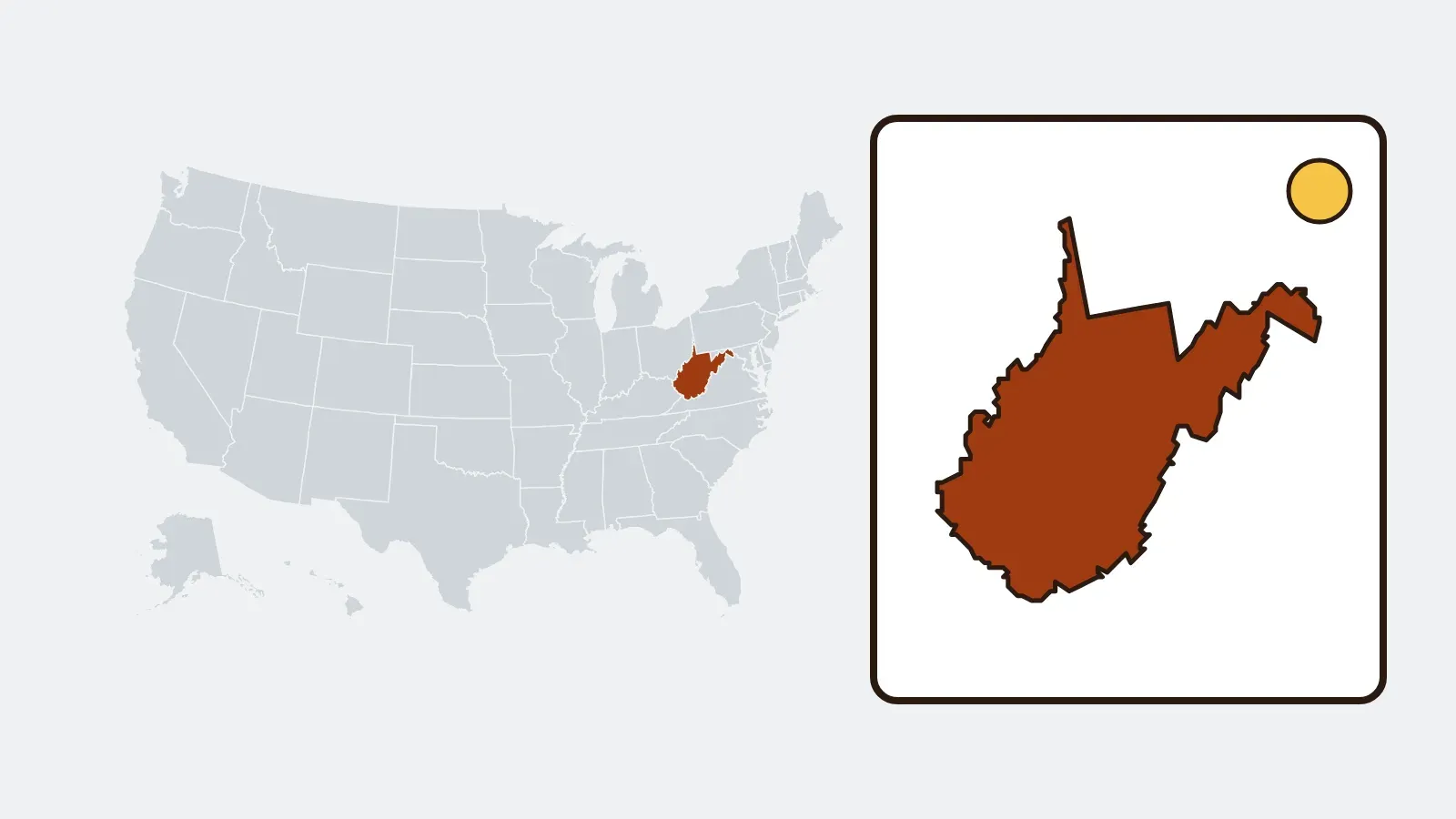
West Virginia car-finance rules at a glance
- Right to cure
- Yes: 10 days after a notice, once 5 days in default
- W. Va. Code §46A-2-106; lost after three defaults with notices on the same debt.
- Rate ceiling
- 18% a year on the first $1,500 financed, 12% on the rest
- §46A-3-101(1) for consumer credit sales; §46A-3-117 allows a higher rate authorized elsewhere in state law.
- Doc fee limit
- Capped through the DMV; check the current cap with the DMV
- The cap is not set in the Code, and we found no official publication of the current figure.
- After repossession
- No deficiency if $1,000 or less is owed; notice before sale; redemption
- §46A-2-119; the creditor may instead offer a price-guide credit (§46A-2-119a).
- Vehicle sales tax
- 6% of the price minus trade-in; no local tax
- Regulator
- Division of Financial Institutions
How much a West Virginia car contract can charge
When a dealer arranges your loan, you sign a retail installment contract, which Chapter 46A of the West Virginia Code treats as a consumer credit sale. Section 46A-3-101 caps the sales finance charge in two layers, both figured with the actuarial method.
| Part of the unpaid amount financed | Maximum rate |
|---|---|
| $1,500 or less | 18% a year |
| Above $1,500 | 12% a year |
Section 46A-3-117 lets a seller use another rate authorized elsewhere in state law if it is higher, and a finance company that buys the contract may collect the contract rate only up to what the seller could have charged (§46A-3-104). Banks, credit unions and licensed consumer lenders making direct loans follow their own limits. Compare the APR on every offer with the car payment calculator.
Fees and taxes on a West Virginia purchase
- Sales tax. Section 11-15-3c sets the vehicle sales tax at 6% of the sale price for purchases since July 1, 2017. It is paid when you title the car.
- Trade-ins. The value of a traded vehicle on which you already paid the tax is subtracted from the price before the tax is figured.
- No local add-on. Cities and counties may not add their own sales or use tax to a vehicle sale.
- Doc fee. The fee is capped through the Division of Motor Vehicles rather than set in the Code, and we could not find the current figure in an official DMV publication. Ask the dealer for the fee in writing and check the current cap with the DMV before you sign.
Your right to cure a missed payment in West Virginia
Section 46A-2-106 is the core protection. After you have been in default for 5 days, the creditor may send a written notice of your right to cure. The notice must name the creditor, describe the transaction, state the amount due and the deadline, and go to any cosigner too.
- Wait for or request the notice. The creditor may not accelerate, sue, demand the car or take it until 10 days after the notice.
- Cure within 10 days. Pay all unpaid sums due at that time, plus any unpaid delinquency or deferral charges. You do not have to pay the whole balance.
- Back on track. A cure restores your rights under the contract as if the default had not happened.
- Limit. After you have defaulted three or more times and received three or more such notices on the same debt, you lose the right to cure.
After repossession in West Virginia
- No deficiency on small balances. If you owe $1,000 or less when the car is repossessed or surrendered, you are not personally liable for the rest (§46A-2-119).
- Price-guide credit. Instead of selling the car, the creditor may offer in writing to credit its value, the average of the retail and trade-in figures in a price guide, against the debt. You may refuse; if you agree in writing, the creditor need not hold a sale and cannot charge sale costs (§46A-2-119a).
- Sale and redemption. Otherwise the creditor sells the car under the Uniform Commercial Code: it must send a notice before the sale, and you can redeem the car until then by paying the balance and costs.
Read our guides to repossession and the balance left after a sale for what to do at each step.
Where to check a lender and complain
The Division of Financial Institutions oversees state-chartered banks, credit unions and other financial institutions and runs a consumer complaint process. For dealer problems, the Attorney General's office also takes complaints.
Division of Financial Institutions
Oversees state financial institutions and takes consumer complaints at 304-558-2294.
West Virginia Attorney General
Takes consumer protection complaints, including complaints about dealer practices.
Consumer Financial Protection Bureau
Takes complaints about any auto lender or servicer, including banks and finance companies.
Questions people ask
Do I get a chance to catch up before my car is repossessed in West Virginia?
Yes. Once you are 5 days in default, the creditor may send a right-to-cure notice, and it cannot repossess until 10 days after the notice. You lose this right after three defaults with notices on the same debt.
What is the maximum interest rate on a dealer car contract in West Virginia?
Section 46A-3-101 allows 18% a year on the first $1,500 of the unpaid amount financed and 12% on the part above $1,500, unless another rate authorized by state law is higher.
Does a trade-in lower the sales tax in West Virginia?
Yes. The 6% tax applies to the price minus the value of a traded vehicle on which you already paid the tax.
Can I owe money after a repossession in West Virginia?
Only if you owed more than $1,000 when the car was taken. At $1,000 or less, you are not personally liable for the unpaid balance.
Sources
- W. Va. Code §46A-2-106: Notice of consumer's right to cure default
- W. Va. Code §46A-3-101: Sales finance charges for consumer credit sales
- W. Va. Code §46A-2-119: Restrictions on deficiency judgments
- W. Va. Code §46A-2-119a: Price guide value in calculating deficiency or surplus
- W. Va. Code §11-15-3c: Sales tax on motor vehicles
- West Virginia Division of Financial Institutions
Facts on this page were checked against these sources on October 26, 2026. The DMV does not publish its doc fee cap in these sources, so check the current figure with the DMV.
Read next
-
Help
Behind on payments
What a missed payment costs, what to ask your lender for, and when repossession becomes a risk.
-
Help
Repossession
When the lender can take the car, what an agent may not do, and how to get it back.
-
Help
Deficiency balance
How lenders compute what you owe after a repossession sale, and how to check or dispute it.